
Upgrading Nigeria’s Economic Reforms for Shared Gains

When President Bola Tinubu announced Nigeria’s ambitious economic reforms in 2023, he framed them as bold steps to rescue the nation from fiscal collapse and stagnation. Two years later, his administration points to some verifiable gains: revenue mobilisation is up, FX market turbulence has eased, inflation is moderating, and GDP growth is stabilising.

It is only fair to admit that these are not trivial developments. Meeting the 2025 revenue target ahead of schedule signals improved fiscal mobilisation. Clearing a long-standing foreign exchange backlog has restored some investor confidence and narrowed currency spreads. Oil output is recovering towards 1.5 million barrels per day. Services are also driving GDP growth as bank recapitalisation is strengthening financial stability.

And yet, for millions of Nigerians, these numbers tell a story their wallets do not recognise.

The Reform–Reality Gap

Despite these “gains,” everyday Nigerians face the harshest cost-of-living pressures in a generation. Inflation, though easing statistically, still sits above 21%. Prices of food and essentials remain painfully high. The removal of the petrol subsidy, electricity tariff hikes, and a weaker naira have combined to squeeze household incomes and overwhelm small businesses.

This isn’t just about economic indicators. It is about lived experiences of everyday Nigerians. For them the bread and butter issues they faced under President Buhari have gotten worse, not better, under President Tinubu. What some of us tell our colleagues in government or those that politically lean towards the ruling party is: save your saliva; Nigerians feel prices, not your percentages.

Reforms are often front-loaded with pain while benefits arrive on a lag. I’m not one, but my economist friends call it “J-curve” in their trade. Let us tell ourselves the truth about Nigeria: weak social safety nets mean there’s little cushion to soften the knock-out blows citizen receive daily. I’m not sure government genuinely agrees with this but without  targeted, transparent interventions, reform fatigue risks eroding public trust and stalling the entire recovery agenda.

The Right Direction Maybe, But…

This isn’t a call for a U-turn. Nigeria’s policy shifts on FX unification, revenue reforms, and financial sector recapitalisation are directionally correct. The problem lies in sequencing, communication, and cushioning.

Take fuel subsidy removal: economically rational, but socially destabilising without simultaneous investments in mass transit, targeted and honest cash transfers, and energy alternatives. Or electricity tariffs: cost-reflective pricing is unavoidable for investor confidence, but Nigerians should never pay more for darkness.

Reforms succeed when policy discipline meets citizen empathy. Nigeria must not pursue stability at the expense of social cohesion.

Lessons From Abroad — A Wider Lens

Nigeria is not alone in navigating the pain-versus-gain cycle of ambitious economic reforms. Around the world, other economies have grappled with similar dilemmas, some successfully, others less so.

1. Ghana (2022–2025) — The Discipline Dividend

  • Implemented an IMF-backed stabilisation plan, cutting subsidies and increasing taxes.
  • Faced severe short-term hardship: food and fuel prices soared, public sector strikes intensified.
  • Outcome: By 2025, inflation has fallen, FX has stabilised, and investor confidence has begun returning.
  • Lesson for Nigeria: Pain upfront can deliver gains later. But only if reforms are sustained and supported by credible institutions.

2. Kenya (2024) — Reform Without Buy-In

  • Rolled out aggressive tax reforms to boost revenue but underestimated citizen fatigue.
  • Lack of social dialogue and safeguards triggered mass protests (“#RejectFinanceBill2024”), forcing partial reversals.
  • Lesson for Nigeria: Sequencing and fairness matter; reforms fail when citizens don’t trust the process or feel excluded.

3. Indonesia (1998–2025) — Gradual, Inclusive Transformation

  • After the Asian financial crisis, Indonesia faced soaring inflation, mass layoffs, and currency collapse.
  • Leaders adopted a sequenced reform path:
    • Fiscal discipline paired with targeted subsidies
    • Massive investments in infrastructure and SMEs
    • Progressive liberalisation of FX and trade regimes
  • Outcome: Today, Indonesia is an emerging powerhouse, combining macroeconomic stability with inclusive growth.
  • Lesson for Nigeria: Reforms succeed when sequencing is matched with social buffers and long-term investment.

4. Vietnam (1986–Present) — The Power of Export-Led Strategy

  • Through the Doi Moi reforms, Vietnam shifted from a closed economy to one of the world’s fastest-growing export-driven economies.
  • Prioritised:
    • Investment in manufacturing clusters
    • Integration into global value chains
    • Gradual FX liberalisation backed by trade surpluses
  • Outcome: Sustained GDP growth above 6% for decades, drastic poverty reduction, and rising FDI inflows.
  • Lesson for Nigeria: Nigeria must pair fiscal reforms with an export strategy to truly stabilise the naira and diversify earnings.

5. India (1991–Present) — Reform + Communication = Buy-In

  • Faced with a balance-of-payments crisis, India liberalised FX markets, cut subsidies, and opened up to global trade.
  • Key to success was political storytelling: reforms were communicated clearly, framed as national revival, and backed by bipartisan consensus.
  • Outcome: From a fragile, closed economy to a top-five global economy, driven by services exports, tech, and manufacturing.
  • Lesson for Nigeria: Economic reforms thrive when communication, credibility, and consistency align.

Nigeria can learn from these transition economies: reforms succeed only when people believe the sacrifices will pay off. And please do not start bullying Nigerians when they do not understand the right things that you are trying to do. Or call citizens daft moaners when it is your responsibility to calmly and proactively make them get the gist.

Upgrading the Reform Agenda: a five-point recommendation

These recommendations are not about abandoning reforms. It is about upgrading them:

1. Make Revenue Fair and Transparent

  • Widen the tax net instead of overburdening compliant taxpayers.
  • Publish verifiable quarterly revenue and expenditure dashboards to build trust.

2. Protect the Most Vulnerable

  • Expand and digitise targeted cash transfers to shield low-income households.
  • Reduce “one-size-fits-all” tariffs and create relief bands for SMEs and rural consumers.

3. Fix the Power Sector, Predictably

  • Tie tariff hikes to enforceable service benchmarks: if tariffs rise, service must rise too. Remember that Nigerians have adapted to darkness. But please do not make them pay for the same darkness that you created.
  • Invest in decentralised renewables to reduce dependency on the national grid. Belgium offers huge opportunities on renewables and entrepreneurs there and in Nigeria are ready to engage. Organise the table for them with business forum, trade mission, et cetera.

4. Unlock Food Security

  • Secure agricultural belts and provide affordable storage and logistics.
  • Support mechanisation and smallholder financing to bend food inflation downward.

5. Communicate With Candour

  • Nigerians are resilient, but not if kept in the dark. Citizens deserve clear, frequent, and honest communication about the economic roadmap and trade-offs.

Turning Stability Into Shared Prosperity

Nigeria stands at an economic crossroads. The stabilisation drive is working in parts. But citizenship legitimacy, which is the sense that reforms serve people, not just numbers, remains fragile.

As I often remind policymakers both in Europe and in Africa:

“Stability isn’t the destination. Prosperity is. Reforms must move from policy papers to people’s pockets.”

This requires patience, yes, but also precision. Nigeria doesn’t need to turn back. It needs to upgrade. It must upgrade with empathy, sequencing, and execution. If we get that right, this moment of pain can become the platform for shared prosperity.

The author, Collins Nweke is senior consultant international trade and researcher on economic diplomacy. A former three-term Green Councillor at Ostend City Council, Belgium, Collins is a fellow of the Chartered Institute of Public Management of Nigeria and the Institute of Management Consultant. He is also a distinguished fellow of the International Association of Research Scholars & Administrators, where he serves on its Governing Council. Collins writes from Brussels, Belgium.

The BRICS and G7 Politics for Nigeria: Not One or the Other

youtube.com/watch

by Collins Nweke

In the dynamic arena of global geopolitics, Nigerians must shed the illusion that their country has to pick sides between BRICS and the G7. Rather than viewing these blocs as mutually exclusive, Nigeria should boldly pursue a dual-engagement strategy that taps into the opportunities offered by both. It is not a matter of ‘either-or’ but ‘both-and’. This is a strategic move that reflects Nigeria’s aspirations as a global player.

BRICS vs G7 is a false dichotomy

It is true that China, a key BRICS member, has invested heavily in Nigeria’s industrial sector. This is particularly visible in the Ogun, Ota, Lagos, and Badagry axis, among other locations. These visible investments often overshadow Western contributions, which tend to be more subtle and regulatory-focused. But raw investment volumes do not tell the whole story. Many Chinese investments come with challenges. Take debt sustainability as example. Limited local job creation remains an issue. We cannot ignore environmental concerns either. Meanwhile, G7-linked initiatives often support democratic institutions, capacity building, and regulatory reforms that are less visible but equally essential for long-term development.

Currency Policy and the Sovereignty Debate

Yes, Bretton Woods institutions influenced by G7 powers often push currency devaluation policies in emerging economies, including Nigeria. But it would be simplistic to attribute Nigeria’s economic struggles solely to G7 influence. Macroeconomic mismanagement at home plays a major role. It is also worth noting that BRICS institutions like the New Development Bank have not exactly rushed to fill Nigeria’s financing gaps. Neither bloc is altruistic. Both run based on interest. Those rooting for Nigeria should assume the responsibility of strategically aligning their interests with those of Nigeria.

Non-Alignment 2.0: Nigeria’s Diplomatic Playbook

Nigeria must take a cue from fellow emerging powers like India and South Africa who engage both BRICS and G7 with calculated pragmatism. This is not fence-sitting. It is strategic positioning in a multipolar world. Nigeria’s influence must be exercised in multiple fora. The country must use BRICS to assert African agency while using G7 platforms to strengthen ties with traditional powers and access advanced technology, finance, and markets. And this brings me to the issue of strategic engagement as opposed to selective alignment.

Frustration with the G7 is understandable. However, disengagement is not a strategy. Nor is blind faith in BRICS a silver bullet. Nigeria must evolve from being a passive recipient of foreign policy to becoming a confident global actor. The future lies not in choosing sides, but in choosing strategy.

That is why I stand by my position: Nigeria needs BRICS and G7. This is not naivety; it is geopolitical maturity. Let us play the global game with clarity, courage, and conviction.

Watch my related interview with Amarachi Ubani of Channels TV: https://youtu.be/Esp8JpRHCV8?feature=shared

The Diaspora as Drivers of Service Export for Nigeria

youtube.com/watch

In this conversation with TVC Breakfast anchored on my policy recommendation for an organised service export for Nigeria, I highlighted the Diaspora component of Nigeria’s current Renewed 4D Foreign Policy doctrine as providing the required framework.

Partnerships for Achieving Nigerian Diaspora Voting

Providing editorial consultancy for this documentary film project, it was my pleasure to assemble four critical resource persons under the leadership of Diaspora Industrialist and Author, Dr John C. George, to provide penetrating insights into how far Nigeria has come on Diaspora Voting. The discussants equally delved into what exactly needs to happen to make Diaspora Voting happen. The outcome is a unique cross-fertilisation of ideas.

Nigerian Diaspora Voting may be a long time in coming but it no longer is a matter of if it will happen. It is now a question of when.
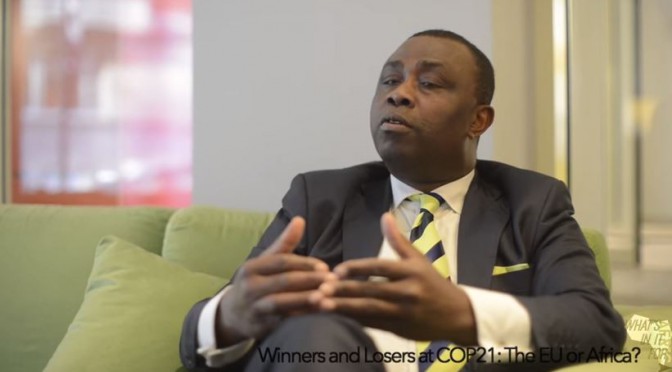
Economic Diplomacy & the Diaspora

I was delighted to have made a presentation at a Multi-sectoral Stakeholders Economic Investment Summit organised bySME Secretariat and hosted at the Lagos Chamber of Commerce, Victoria Island, Lagos Nigeria on Monday 21 January 2019
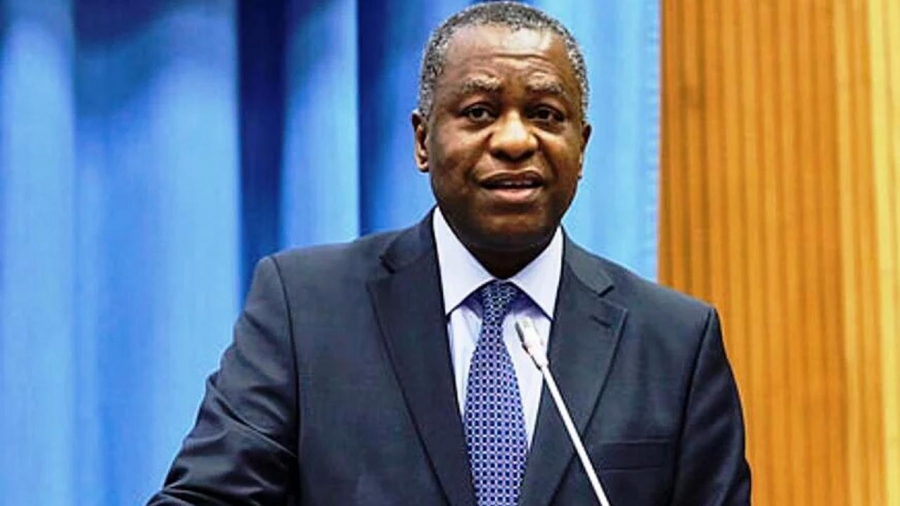
Jeffrey Onyeama Minister of Foreign Affairs of Nigeria

I used the opportunity to review the Nigerian Economic Diplomacy Initiative (NEDI) of the Ministry of Foreign Affairs of Nigeria under President Muhammadu Buhari. After a general refresher of what NEDI is all about, I dropped the following conclusions on this policy initiative:

  • NEDI is a strategically important policy tool with huge potentials to make a structural difference in economic regeneration of Nigeria with focus on non-oil sector
  • NEDI made a good start but has clearly not lived up to its biddings. It has failed rather woefully in showing evidence that it has made a convincing start in delivering on the important task of enhancing inter-agency collaborations
  • There is no visible effort on the part of NEDI to genuinely engage the Diaspora in a result-oriented way
  • Unless there is a change of course, NEDI is marked to fail!

I wrapped up with these sets of recommendations:

  • Foreign trade component should be introduced into the operations of all Ministries, Departments & Agencies (MDAs)
  • A NEDI Attaché should have a sitting in all major Missions of Nigeria worldwide where possible or the role unambiguously integrated into the duties of all diplomats charged with economic affairs
  • A formal working relationship should be initiated with Nigerians in Diaspora Organisation (NIDO) worldwide to enhance professional Diaspora mobilization
  • Clear targets should be set for inward investment flows as aconsequence of NEDI activities

Access to the integral PowerPoint Presentation on Economic Diplomacy & the Diaspora is possible:https://1drv.ms/p/s!AuyRKnHzz067wRMWQFFnd28yiaXL