Zero-Tariff China Access can be a Strategic Opening for Nigeria if Matched with Domestic Reform

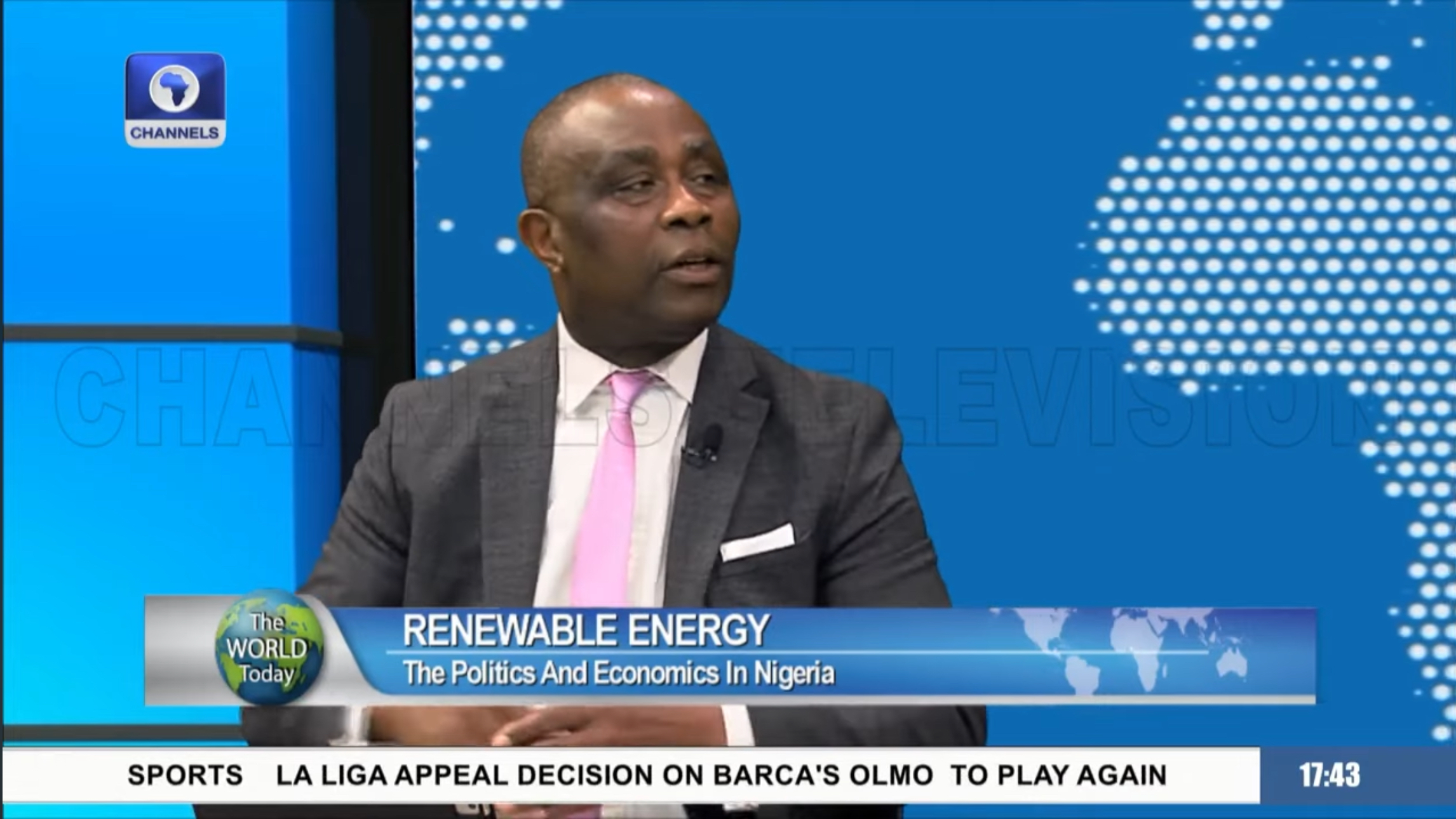
In a Worker’s Day 2026 interview, incidentally the same day that Zero-Tariff China Access for Africa took effect, South African Broadcasting Service radio, had me on to discuss the implications of the new trade regime for Nigeria.

Zero-Tariff China Access essentially means that a wide range of African exports can now enter China duty-free. For Nigeria, this is both an opportunity and a test of readiness.

On the opportunity side, it potentially opens up the world’s second-largest consumer market to Nigerian products like agricultural goods, solid minerals, leather, textiles, and even some manufactured items. If properly leveraged, Nigeria could diversify away from oil and earn more non-oil export revenue, which is critical for economic stability.

However, and this is the critical point, zero tariffs do not automatically translate into increased exports. Nigeria’s challenge has never really been market access. It has been production capacity, quality standards, and export logistics. China is a highly competitive market with strict phytosanitary and industrial standards. Many Nigerian producers are not yet positioned to meet those consistently.

There is also a structural concern: without a deliberate export strategy, Nigeria risks deepening its role as a raw material supplier, rather than moving up the value chain. So instead of exporting processed cocoa, for example, we may continue exporting raw cocoa while importing finished goods at a higher value.

So, in summary, Zero-Tariff China Access is a strategic opening, but it will only benefit Nigeria if it is matched with domestic reforms: improving infrastructure, supporting exporters, ensuring standards compliance, and aligning trade policy with industrial policy.

If Nigeria gets that alignment right, this could be transformative. If not, it risks becoming another missed opportunity, I told Innocent Samosa, Business Reporter at SABS Radio here

https://omny.fm/shows/business-africa/china-grants-africa-zero-tariff-access-to-all-africa-countries

The New Mobility Consensus: A Challenge for the Greens in a Post-Bulldozer Brussels

The political landscape of Brussels is undergoing a transformation that few would have predicted a year ago. This is more so for those of us who have long championed sustainable mobility. With Boris Dilliès, the newly elected Minister-President, now framing cycling not as a competitor to the automobile but as a benefactor to it, we are witnessing a significant recalibration of urban discourse.

For the seasoned observer, this shift invites a dual reading. Is it a cynical political flip-flop, a calculated attempt to neutralise opposition? Or is it a genuine evolution toward political realism? That is the pragmatic recognition that in a dense, complex city like Brussels, the “car-versus-bike” culture war has become a net negative for governance.

Whatever the reading, Dilliès’ rhetorical pivot is astute. By thanking cyclists for “making space for drivers,” he has effectively dismantled the adversarial binary that paralysed the previous administration. For those of us who are keen cyclists and have spent years fighting for protected lanes, this is, in many ways, a victory of normalisation. Cycling is no longer a niche, ideological pursuit. It is now recognised as a systemic necessity.

However, this “Dilliès Consensus” leaves the traditional progressive and Green forces in a precarious, if not uncomfortable, position.

The Dilemma for the Greens

For parties that have made pro-cycling infrastructure their raison d’être, having an opponent adopt your language and arguably, your policy trajectory, is disarming. It creates a “success trap.” When your primary political antagonist starts implementing the very measures you campaigned on, the traditional mechanisms of opposition begin to rust. If you continue to attack, you risk appearing dogmatic or obstructionist. If you remain silent, you lose your distinctive brand.

The Green movement in Brussels now faces a fundamental strategic inflection point. If the Minister-President is truly committed to this path, the “activist” phase of policy-making for the Greens has reached its end. The Greens must now transition from being the architects of resistance to the guardians of implementation.

A Strategy for the New Era: Three Pillars for the Greens

To remain relevant and influential in the new, “pragmatic” Brussels, the Green movement must evolve its positioning:

1.      Move from “Why” to “How”: The ideological debate on the necessity of cycling is largely won. The new battleground is delivery. The Greens should shift their focus to rigorous oversight, holding the government accountable to the technical quality, safety standards, and timelines of new infrastructure. If Dilliès is serious about his pragmatism, he will welcome this oversight. If he is not, the Greens become the essential “quality control” for the city.

2.      Redefine “Pragmatism” to include Equity: Dilliès’ pragmatism focuses on traffic flow and commuter efficiency. The Greens should expand the definition of pragmatism to include social and spatial justice. A truly pragmatic city is not just one that moves traffic efficiently. It is one that ensures that mobility is inclusive of those who cannot afford a car and those who live in the most congested, polluted neighbourhoods. This provides a distinct, “value-add” dimension to the discourse that the current government’s efficiency-based narrative may overlook.

3.      Claim the “Systemic Architect” Role: Rather than fighting over individual lanes, the Greens should position themselves as the designers of the next systemic leap: intermodal hubs, regional connectivity, and the integration of micro-mobility with public transport. By focusing on the system rather than the symptom, you reclaim the role of visionaries.

Ultimately, the normalization of cycling in Brussels is an achievement the Greens should claim, regardless of which party carries the banner. True political maturity lies in recognising that our ideas are stronger when they transcend party lines.

For the Greens, this is not a moment for mourning the loss of a battle. It is an invitation to elevate the war. The goal was never to win a partisan victory. The goal was to build a livable city. If the current administration is willing to help lay the bricks, the task of the Greens is not to tear the wall down, but to ensure it is built to last. It is time for a new kind of opposition: one defined not by obstruction, but by a relentless commitment to the public good.

The UK-Nigeria Migration Pact: Strategic Diplomacy or a Missed Opportunity for Human Capital?

The recent “strengthening” of the Migration, Justice, and Home Affairs (MJHA) partnership between the United Kingdom and Nigeria marks a pivotal, yet contentious, moment in Afro-British relations. Billed as a “landmark” in security cooperation, the deal introduces the “UK Letter”, dressed up as a mechanism allowing the UK Home Office to bypass traditional passport bottlenecks for removals, alongside a “Fusion Cell” to combat visa fraud.

While the optics suggest a robust defense of sovereign borders, a deeper policy analysis reveals a framework that is increasingly out of sync with the global shift toward Economic Migration Management. For a partnership that claims to be “forward-looking,” it remains stubbornly anchored in the mechanics of removal rather than the dynamics of human capital.

The Asymmetry of the “Security-First” Model

On the surface, the MJHA is presented as a reciprocal arrangement. However, the benefits are fundamentally asymmetrical. The UK gains a fast-track solution to a domestic political pressure point; the visibility of “failed” migration; while Nigeria receives vague assurances regarding business visa streamlining.

As a migration advocate, one must ask: is Nigeria merely serving as an enforcement arm for the UK Home Office? By facilitating the removal of thousands without addressing the structural drivers of their movement, we are treating the symptoms of a global economic disparity while ignoring the disease.

Shifting the Paradigm: Lessons from the ‘Arraigo’ and ‘Chancenkarte’

To move toward a more statesmanlike discourse, we must look to European neighbours who are pioneering more sophisticated, “rooting-based” models.

·      Spain’s Arraigo (Social Rooting): Spain has recognized that after two to three years of residency, an individual is no longer just a “migrant” but a community member. Their model allows for the regularisation of status through employment, turning a “legal liability” into a Social Security-contributing asset.

·      Germany’s Chancenkarte (Opportunity Card): Germany is moving toward a points-based flexibility that allows migrants to “switch lanes” (Spurwechsel) from irregular status to work permits if they possess the skills the German economy lacks.

These are not “soft” policies. They are economically literate ones. They prioritise the fiscal contribution of the individual over the prohibitive cost of deportation flights and diplomatic friction.

A Blueprint for “Migration for Development”

Nigeria should not be a passive “returning partner.” A truly strategic partnership would advocate for a Global Skill Partnership (GSP).

In this model, the UK would invest in Nigerian vocational training, creating a “dual-track” system. One group of trainees remains to strengthen the Nigerian domestic market, while the other is granted a legal, streamlined pathway to the UK. This transforms the “brain drain” into a “brain gain,” ensuring that Nigeria’s human capital is developed, not just depleted. The initiative, SkillUp Nigeria can be a credible partner in this model.

Furthermore, we must discuss Regularisation for Remittance. With remittances to Nigeria exceeding $20 billion annually, the economic stability of millions of Nigerian households depends on the diaspora. Instead of mass removals, the UK should offer “probationary status” to non-criminal overstayers. This keeps the wheels of the Nigerian economy turning and saves the UK taxpayer the immense cost of enforcement.

In the final analysis, Nigeria and the UK must move from enforcement to engagement. The 2026 UK-Nigeria pact is a functional tool for border security, but it is not a vision for a shared future. If the UK and Nigeria are to be true strategic partners, they must move beyond the “UK Letter.”

We must demand a transition from Security-led Migration to Investment-led Migration. Security is a prerequisite for order, but human capital is the prerequisite for prosperity. A modern, statesmanlike approach would value the Nigerian migrant not by the speed of their departure, but by the potential of their contribution.

 Collins Nweke is the author of Economic Diplomacy of the Diaspora (2026) and Senior International Trade Consultant. He writes from Brussels, Belgium.

The Brussels Mission of Nigeria Must Become a Command Centre for Economic Diplomacy

by Collins Nweke

Belgium’s logistics power, Luxembourg’s financial strength, and the regulatory influence of the European Union make Brussels one of Nigeria’s most strategically important diplomatic postings. The challenge for Nigeria’s new envoy is to convert presence into economic and geopolitical influence. Because diplomacy today is no longer conducted only across negotiating tables, but across networks of trade, finance, technology, and people.

Diplomacy in the twenty-first century is no longer only about representation. It is increasingly about economic positioning. Nowhere illustrates this reality more clearly than Nigeria’s diplomatic mission to Belgium, the Grand Duchy of Luxembourg, and the European Union.

For many Nigerians, Brussels may appear as just another European capital where Nigeria maintains an embassy. In reality, it is one of the most strategically consequential diplomatic platforms Nigeria possesses anywhere in the world.

From trade logistics to financial capital and regulatory influence, the Brussels mission sits at the intersection of three powerful European systems that directly shape Nigeria’s economic future.

Brussels as Nigeria’s Triple Strategic Gateway

Nigeria’s envoy in Brussels operates within what may best be described as a triple gateway to Europe.

Belgium: Europe’s Logistics Platform

Belgium hosts one of the most important maritime trade hubs in the world. The Port of Antwerp-Bruges serves as a key entry point for goods moving into the European market.

For Nigeria, this port represents more than maritime infrastructure. It is a strategic corridor through which Nigerian exports, from agricultural products to petrochemicals, enter the broader European economy.

A proactive diplomatic strategy in Belgium can therefore directly influence Nigeria’s trade competitiveness in Europe.

Luxembourg: Global Capital Markets

Luxembourg, despite its small size, is one of the world’s most influential financial centres. It hosts one of the largest global investment fund industries and plays a leading role in sustainable finance.

As Nigeria seeks to diversify its economy and finance infrastructure development, Luxembourg offers access to sophisticated financial instruments including green bonds, blended finance structures, and climate investment platforms.

For Nigeria, the Luxembourg dimension of the Brussels mission represents an opportunity to connect diplomacy with global capital markets.

The European Union: Regulatory Powerhouse

The third pillar of the mission is the European Union itself.

EU policy decisions increasingly shape the rules governing global trade, digital markets, climate compliance, and supply-chain sustainability. Measures such as the EU Carbon Border Adjustment Mechanism, for example, will have direct implications for African exporters.

Nigeria’s presence in Brussels must therefore go beyond ceremonial diplomacy. It must become an active platform for regulatory engagement and strategic dialogue with European institutions.

From Protocol Diplomacy to Economic Statecraft

If Nigeria is to maximise the strategic value of this mission, the embassy in Brussels must function less as a traditional diplomatic outpost and more as a hub of economic diplomacy.

Three areas deserve particular attention.

The Creative Economy Opportunity

Nigeria’s cultural industries, which include film, music, fashion, and digital media, have become global brands with strong commercial potential.

These sectors should be positioned within European markets not simply as cultural expressions but as high-growth investment ecosystems capable of attracting venture capital, distribution partnerships, and technology collaboration…

Economic diplomacy must learn to speak the language of culture as commerce.

Energy Transition and Climate Finance

Europe’s green transition is reshaping global energy markets. For Nigeria, the strategic challenge is to balance its role as a major natural gas supplier while also accelerating domestic renewable energy capacity.

Luxembourg’s financial ecosystem could provide a platform for structuring green financing instruments capable of supporting Nigeria’s long-term energy transition.

Handled strategically, diplomacy can help Nigeria convert climate pressure into investment opportunity.

Harnessing Diaspora Networks

Nigeria’s diaspora across Europe remains one of the country’s most underutilised strategic assets.

Highly skilled Nigerian professionals operate across European institutions, research centres, financial markets, and technology companies. Their networks represent a form of diplomatic capital that traditional embassies often fail to mobilise.

A forward-looking mission should treat the diaspora not merely as citizens abroad but as partners in economic diplomacy.

Five Strategic Priorities for Nigeria’s Brussels Mission

1. Trade Corridors

Deepen commercial engagement through the Port of Antwerp-Bruges as a gateway for Nigerian exports into European markets.

2. Financial Diplomacy

Leverage Luxembourg’s leadership in investment funds and green finance to support Nigeria’s infrastructure and renewable energy ambitions.

3. Regulatory Engagement

Strengthen Nigeria’s presence within EU policy conversations on trade, digital regulation, climate policy, and supply chains.

4. Creative Economy Promotion

Position Nigeria’s cultural industries—film, music, fashion, and digital media—as investment opportunities rather than cultural showcases.

5. Diaspora Economic Power

Treat the Nigerian diaspora in Europe as strategic partners capable of opening doors in business, academia, and policy networks.

The Narrative Challenge

Despite Nigeria’s economic scale and cultural influence, perceptions within Europe are often shaped by narratives centred on migration, governance challenges, and regional insecurity.

If Nigeria’s diplomatic engagement remains reactive, these narratives risk defining the entire relationship.

The more strategic approach is to reposition Nigeria as what it increasingly is: Africa’s largest economy, a major cultural exporter, and a critical geopolitical actor in West Africa.

This shift requires deliberate storytelling, sustained engagement with European policymakers, and strong partnerships with think tanks, business communities, and civil society networks.

A theme I explore in my recent book, Economic Diplomacy of the Diaspora, is that diplomacy in the twenty-first century must expand beyond state institutions to include networks of entrepreneurs, professionals, and communities operating across borders. Brussels provides precisely such an environment, where formal diplomacy intersects with business, finance, and diaspora influence. For Nigeria, leveraging these networks may prove just as important as the traditional tools of statecraft.

A Strategic Opportunity

Nigeria’s mission in Brussels stands at the crossroads of trade, finance, regulation, and diplomacy.

In many ways, it is less a conventional embassy and more a strategic command centre for Nigeria’s engagement with Europe.

The challenge now is to ensure that Nigeria’s presence in Brussels reflects the scale of its ambitions. When Europe debates Africa’s economic future, Nigeria should not merely be represented in the room. Nigeria should help shape the conversation.

Because in the diplomacy of the twenty-first century, influence is not measured only by embassies and protocol, but by the ability to turn networks into opportunity.

And few places offer Nigeria more opportunity to do so than Brussels.

Diplomacy, Perception, and the Berlin Question

by Collins Nweke

Diplomacy, Perception, and the Berlin Question
by Collins Nweke

I have read with great interest the thoughtful intervention by my longtime friend and associate, Frank Ofili, concerning the reported appointment of Femi Fani-Kayode as Nigeria’s Ambassador to Germany. His analysis rightly situates the issue within the broader intersection of diplomacy, history, and perception.

Many watchers will largely align with the thrust of Frank Ofili’s argument captioned FFK As Nigeria’s Ambassador to Germany: Diplomacy or Contradiction?

This is not a question of personalities or partisan loyalties. It is a question of diplomatic calibration the essence of which is the careful alignment between a nation’s envoy and the political sensitivities of the host country. In modern diplomacy, perception can sometimes matter as much as policy.

Germany’s Historical Sensitivity

Germany’s foreign policy posture cannot be understood outside the shadow of the Holocaust. Since the end of the Second World War, successive German governments have framed their relationship with Israel as a moral responsibility. Former Chancellor Angela Merkel captured this sentiment when she told the Knesset that Israel’s security formed part of Germany’s raison d’état. Her successor, Olaf Scholz, has reiterated this doctrine repeatedly.

For Berlin, support for Israel is not merely an element of foreign policy; it is embedded within the country’s historical conscience. It follows that diplomats posted to Berlin must operate within that unique political atmosphere. Any envoy whose past public commentary appears sharply critical of Israel may therefore face unusually intense scrutiny from German political circles, the media, and civil society.

How Berlin Might React

If the appointment proceeds, three arenas in Germany are likely to react quickly:

1. The German Media

Germany’s press culture is robust and investigative. Major newspapers such as Frankfurter Allgemeine Zeitung, Die Welt, and Süddeutsche Zeitung routinely examine the public records of incoming ambassadors.

Past statements by the envoy would likely be revisited, contextualised, and debated. This will particularly be so with those touching on Israel or Middle Eastern conflicts. This could frame the diplomatic narrative before the ambassador even presents credentials to the German President.

2. Political Establishment

Within the Bundestag, parties across the ideological spectrum, from the Christian Democrats to the Greens, maintain strong pro-Israel positions. Parliamentary committees dealing with foreign affairs could interpret prior anti-Israel rhetoric as diplomatically awkward.

While Germany would not ordinarily block an ambassadorial appointment, the tone of official engagement might initially become cautious or guarded.

3. Public and Academic Discourse

Germany’s policy ecosystem includes influential think tanks, foundations, and universities deeply engaged in Middle East policy debates. These institutions often shape elite opinion. Questions about the suitability of an envoy could easily enter these circles and amplify reputational concerns.

Possible Negative Fallout

Several practical consequences could emerge if the diplomatic optics become contentious:

1. Distraction from Strategic Priorities

Nigeria’s relationship with Germany spans trade, renewable energy, migration cooperation, technical training, and industrial investment. Diplomatic energy could be diverted from these priorities toward managing reputational controversies.

2. Reduced Informal Access

Diplomacy often advances through informal networks: private dinners, policy forums, quiet consultations. If an envoy begins his tenure under a cloud of controversy, elite access may initially narrow.

3. Media Framing of Nigeria

Unfortunately, international audiences often conflate the persona of an ambassador with the posture of the sending country. The debate may shift from the individual to Nigeria’s diplomatic judgment.

A Four-Point Mitigation Strategy

Even where concerns arise, diplomacy always offers pathways to recalibration.

1. Early Diplomatic Reset

The envoy could proactively signal respect for Germany’s historical sensitivities. A carefully framed public statement acknowledging Germany’s post-war moral commitments could help reset perceptions.

2. Focus on Economic Diplomacy

If the ambassador quickly pivots toward economic cooperation, including investment, green energy partnerships, vocational training, attention may gradually shift from controversy to practical collaboration.

3. Strategic Engagement with Think Tanks

Active participation in policy forums hosted by German foundations such as Konrad Adenauer Stiftung, Friedrich Ebert Stiftung, and others could demonstrate intellectual seriousness and rebuild credibility.

4. Abuja’s Supporting Diplomacy

Nigeria’s foreign ministry could reinforce the relationship through high-level visits, trade missions, and bilateral initiatives that underline the strategic importance of the partnership.

The Abuja–Berlin Institutional Memory

It is also worth noting that the current Nigerian Minister of Foreign Affairs, Yusuf Maitama Tuggar, served previously as Nigeria’s Ambassador to Germany for nearly eight years across two diplomatic postings. This is an unusually long tenure in ambassadorial practice. That experience means he is intimately familiar with the political culture of Berlin, its policy ecosystem, and the sensitivities that shape German foreign policy debates. It is therefore reasonable to assume that the reported appointment of Femi Fani-Kayode could not have emerged entirely outside the awareness of the Foreign Ministry. One may legitimately ask: if reservations existed within the ministry, were they overridden, or were they perhaps judged manageable? It is equally conceivable that Abuja believes any potential diplomatic friction can be mitigated through careful calibration, leveraging the institutional relationships and goodwill built during Ambassador Tuggar’s long tenure in Berlin. For all we know, the groundwork for managing the optics may already be quietly underway.

The Larger Lesson

Nigeria has long been regarded as one of Africa’s diplomatic heavyweights. From the anti-apartheid struggle to peacekeeping across West Africa, Nigerian diplomacy has historically carried considerable moral and strategic weight.

That tradition places a premium on careful ambassadorial selection.

Diplomacy is ultimately the art of building bridges. The strength of those bridges often depends not only on national policy but also on the temperament, reputation, and symbolic alignment of those entrusted to represent the nation abroad.

When the host country is Germany, such alignment becomes even more consequential. Watcher always remind themselves that when it is about Germany, you are dealing with an EU superpower whose foreign policy remains deeply shaped by historical memory. Frank Ofili’s intervention therefore raises a legitimate question: not about loyalty or patriotism, but about strategic fit.

And in diplomacy, strategic fit is rarely a trivial matter.

 Collins Nweke is the author of Economic Diplomacy of the Diaspora (2026) and a columnist with Proshare Nigeria and The Brussels Times. He writes from Brussels.

Belgium Was Warned: When You Fight the Poor, Poverty Fights Back

Nearly two million people in Belgium are already at risk of poverty or social exclusion. As welfare reforms move from debate to implementation, the real test is whether activation policies protect people on the way to work. Or simply push hardship elsewhere.

Nearly two million people in Belgium, which is 16.5% of the population, are now at risk of poverty or social exclusion. That is not a marginal statistic. It is a national condition. And it is the backdrop against which Belgium has chosen to implement some of the most far-reaching welfare reforms in decades.

In August 2025, I warned on this space that our welfare debate was drifting from fighting poverty to fighting the poor. It was not a provocation; it was pattern recognition. When social policy shifts from protection to punishment, poverty rarely retreats. It reorganises.

The latest Statbel figures, reported by The Brussels Times, under the headline: Nearly two million Belgians at risk of poverty or social exclusion make that warning harder to dismiss. They confirm how large the vulnerable population already is, before the most disruptive phases of welfare reform have fully taken effect.

A dangerous sequencing problem

In January 2026, I argued that cutting income support without simultaneously removing barriers to work does not “activate” people. It destabilises them. The reform of unemployment benefits now moving through its implementation phase illustrates this with uncomfortable clarity.

Time-limiting benefits may satisfy fiscal logic and political narratives about responsibility. But in the short term, its most predictable effect is an income cliff: households falling abruptly from modest stability into arrears, debt, housing insecurity, and stress. Poverty, unlike ideology, does not respond politely to deadlines.

Crucially, this does not make hardship disappear. It relocates it, onto OCMW/CPAS charities, food banks, local authorities, and informal family networks already under strain. The federal balance sheet may improve on paper, but the social bill does not vanish. It is merely invoiced elsewhere.

The warning signs were never subtle

To suggest that Belgium “did not know” would be inaccurate. Civil society organisations raised alarms early. Trade unions mobilised nationally. Social workers, municipalities, and housing advocates warned that large-scale exclusions would overwhelm local services unless matched by serious investment and safeguards.

Even within mainstream debate, language hardened. Critics did not argue against reform per se; they warned against reform without sequencing; discipline without protection, pressure without pathways. These warnings were not emotional appeals. They were operational ones.

Yet implementation proceeded largely unchanged.

This is what it means to ignore warning signs in modern governance: not that they were unheard, but that they were deemed politically affordable.

I have seen this logic play out at close range. During my first legislative term in municipal governance, I sat on the board of an OCMW/CPAS where success was measured almost exclusively by how fast welfare rolls could be reduced. Special employment schemes were instead used as statistical exits when they ought to serve the purpose of experimental pathways into the labour market. People disappeared from welfare figures, only to reappear later in unemployment data, having gained little real foothold in work. What looked like activation was, in truth, displacement. That experience taught me an enduring lesson: policy that chases clean statistics without caring about transitions does not solve poverty. It reschedules it.

Why the new poverty figures matter now

The latest Statbel-based figures do not yet capture the full impact of reforms still rolling out. That is precisely why they should alarm us. They show that Belgium entered this reform cycle with a very large population already living close to the edge; low-work-intensity households, people facing material and social deprivation, families with little shock-absorption capacity.

When policy tightens income security in such a context, the short-term risk is not theoretical. It is statistical.

And this is where the narrative must change. If poverty indicators worsen in the coming months, it will be tempting to frame that as an unfortunate but necessary “transition cost.” That would be a mistake. A transition that predictably produces avoidable harm is not reform. Call it poor design.

A pro-poor alternative is not anti-work

Arguing for pro-poor policy is not an argument against work, responsibility, or reform. It is an argument for sequencing, dignity, and evidence-based implementation.

Belgium still has choices. A genuinely pro-poor approach would include:

  • Automatic transitions, so no one falls off an administrative cliff when one benefit ends
  • Real co-financing for municipalities, where the social load actually lands
  • Case-based activation, recognising health, age, disability, care responsibilities, and language barriers
  • Training as a ladder, not a loophole or a sanction
  • Public impact dashboards, tracking arrears, housing insecurity, and job quality, not just exits from benefit rolls

These are not radical ideas. They are guardrails. They are the difference between reform that strengthens social cohesion and reform that quietly erodes it.

Reform is where policy becomes ethics

Belgium prides itself on a social model built not merely on efficiency, but on solidarity. That model does not forbid reform. But it does demand that reform be judged not only by fiscal metrics, but by lived outcomes.

When nearly two million people are already at risk, the margin for error is slim. Fighting poverty requires investment, patience, and design discipline. Fighting the poor may feel decisive. But it is a strategy that always ends the same way: with higher social costs, deeper distrust, and a society poorer than before. Belgium was warned. It can still choose to listen. This time in implementation, not hindsight.

Renewal of AGOA Is a Pause, Not a Reset

Following my discussion on TRT World on the renewal of the African Growth and Opportunity Act (AGOA), one thing is clear: this decision restores trade flows, but it does not restore certainty.

The Trump administration’s late-night move reopens duty-free access for over 1,800 African products, ending months of uncertainty for exporters and manufacturers. Yet the renewal is best understood as a pragmatic holding action rather than a return to stable, long-term partnership.

A key point raised during the interview was whether Washington set aside political tensions, particularly with South Africa, which accounts for nearly half of AGOA trade volumes, in order to protect supply chains. The answer is largely yes, but not out of generosity. After more than two decades, AGOA supply chains are deeply embedded in US industries. Letting them collapse would have imposed real costs on American consumers and businesses. Trade pragmatism, in this case, prevailed over political signalling.

However, the extension only runs to year-end. While this prevents immediate disruption, it is insufficient to rebuild full business confidence. Companies invest on multi-year horizons. Short extensions stabilise existing operations but rarely unlock new capital or expansion. For African economies, this narrow window must be used strategically to strengthen compliance, diversify exports, and move further up value chains.

The most consequential signal accompanying the renewal is the insistence on “America First” reciprocity. As discussed in the interview, African markets are not opposed to reciprocity, but they are structurally constrained. Agriculture remains a major source of employment and social stability, and sudden exposure to heavily subsidised US farm products could be destabilising.

What is realistic is calibrated reciprocity: selective and phased market opening, paired with support for African agricultural productivity and value addition. This approach aligns development needs with US commercial interests.

Watch the interview on TRT World here

AGOA’s renewal is therefore neither a breakthrough nor a setback. It is a pause in a rapidly evolving global trade order, one that underscores how trade policy is increasingly transactional, conditional, and shaped by geopolitics. The real test is whether this temporary reprieve leads to a modernised, balanced partnership or simply postpones a deeper reckoning.

EU Doctrine Must Become Action in Venezuela

The European Union has spent the better part of two decades building a foreign-policy identity around a simple promise: power should be constrained by law, and crises should be resolved through principled multilateralism. That promise is not an abstract slogan. It is embedded in the everyday doctrine of the EU External Action Service (EEAS): conflict prevention, mediation and dialogue “as a tool of first response.” This is an integrated approach across the conflict cycle, and a steadfast commitment to a rules-based international order with the UN Charter at its core. 

Venezuela now presents a moment of truth for that doctrine.

In the wake of the US operation that removed Nicolás Maduro, Europe’s public posture has been understandably cautious. It welcomes an opportunity for democratic transition while underscoring that restoring democracy must respect the Venezuelan people’s will and remain anchored in international law and the UN Charter.  That framing is not diplomatic fence-sitting; it is the EU’s most valuable asset: legitimacy.

But legitimacy is only leverage when it is organised into policy. It must happen quickly, coherently, and visibly.

The EU already has a Council mandate that it must use.

Recent Council positions on Venezuela are not ambiguous. The Council has repeatedly renewed restrictive measures and listings in response to democratic backsliding and human-rights concerns, and it has underlined the EU’s commitment to support democracy and a peaceful and inclusive transition.  This is not merely sanctions policy; it is a political line: the EU seeks democratic restoration, but through lawful and inclusive means.

The question is whether Europe will now pair that line with a diplomatic initiative commensurate with the stakes.

EEAS doctrine points to the answer: mediation, preventive diplomacy, and “principled pragmatism.” The EEAS is not starting from scratch. Its mediation doctrine recognises that conflict resolution demands principled pragmatism: defending human rights and the rule of law while engaging the messy realities that make negotiated outcomes possible. 

In practical terms, that should translate into five immediate moves:

1.      Activate an EEAS-led mediation track

The High Representative/VP should mandate the EEAS Mediation Support capacity to convene a structured dialogue framework focused on political freedoms, prisoner releases, electoral guarantees, and transitional governance arrangements. This should be done quietly at first, but with a clear roadmap.

2.      Anchor the process in the UN Charter and regional ownership

Europe should explicitly root its engagement in UN Charter principles, including sovereignty, political independence, self-determination. It should then push for a process that is Venezuelan-led, with meaningful roles for Latin American stakeholders (including Brazil) rather than a purely Washington–Beijing tug-of-war. This aligns with the European Council’s repeated insistence that effective multilateralism and the UN Charter remain the EU’s compass. 

3.      Coordinate “contact group” diplomacy with enforceable sequencing

The EU should help organise a renewed international contact mechanism that couples incentives and constraints in a sequenced way: concrete reforms trigger calibrated relief; reversals trigger targeted re-tightening. The Council’s existing sanctions architecture provides the technical toolset; what is missing is the political choreography. 

4.      Separate accountability from revenge

If Maduro’s detention becomes a geopolitical flashpoint, Europe should insist that accountability for crimes must be pursued through lawful processes, not triumphalism. This is irrespective of whether the crime is corruption, repression, or transnational organised crime. That distinction matters for EU unity and for persuading hesitant partners that this is about norms, not dominance. Europe’s own statements appear to already point in this direction.

5.      Protect EU unity by staying anchored to Council language

Divergences inside Europe are inevitable under pressure. The stabiliser is to keep returning to agreed Council/European Council phrasing: peaceful transition, human rights, verifiable democratic outcomes, and the UN Charter. The more Europe speaks with one legal voice, the harder it becomes for external actors to split the Union into “hawks” and “handwringers.” 

Why this matters beyond Venezuela

This matters because the precedent being set is larger than Caracas. If the world normalises political change through unilateral force, then the guardrails that protect smaller states weaken. This must be without prejudice to how satisfying it may feel in the short term. Europe understands this better than most. It was built to ensure that law restrains power, not the other way around.

That is why Venezuela is not only a Latin American drama. Venezuela is a test of whether the EU still believes in the doctrine it teaches. That doctrine is a gospel according to mediation first, multilateralism always, the UN Charter as the floor, not the ceiling. The doctrine has many converts including the United States and should not require much preaching now.

Europe should not choose between democracy and legality. The EU’s calling is to insist that democracy pursued unlawfully is fragile, and legality pursued without democracy is hollow. The EU has no better comparative advantage than this. The only sustainable outcome is a negotiated transition that is Venezuelan-led, internationally verified, and regionally owned. That is what EU doctrine demands. It is time to operationalise it.

A Fiscal Reset for Nigeria That Depends on Trust

Op-Ed by Collins Nweke

Nigeria’s tax overhaul is less a revenue exercise than a credibility test. It is one that will shape investor confidence, citizen buy-in, and the country’s reform reputation in the face of the world for years to come.

by Collins Nweke

Today, 1 January 2026, marks more than the start of a new year for Nigeria. It is the dawn of a new fiscal era, as the country’s ambitious tax law comes into force. The timing of this piece is deliberate: it coincides with a moment of profound national significance and symbolism. In the months since the law was announced, Nigeria has witnessed spirited debates, rigorous analyses including my op-ed on Proshare titled: Tax Ombud for Nigeria: Navigating a Promising Reform in a Distrustful Context on the role of the tax ombudsman, and passionate protests, all underscoring the gravity of the changes at hand. Yet, despite the turbulence, the government has pressed ahead, undeterred and unwavering in its resolve. Against this backdrop, my purpose is not to add to the noise, but to offer a sober reflection and an objective assessment of what will ultimately determine whether this reform succeeds or falters. For Nigeria, the true test is not simply about raising revenue, but about building credibility, at home and abroad, through the choices made from this day forward.

Operating in the intersection of international trade consultancy and Diaspora thoughts leadership for a couple of decades now, feels like a long-standing bridge between Nigeria and global capital. In such vantage position, I have learnt one enduring lesson: investors do not fear reform, they fear uncertainty. Nigeria’s new tax framework should therefore not be viewed as a risk by default, instead of the test that it is. A test of credibility, sequencing, and Nigeria’s capacity to translate reform intent into institutional reliability.

The Federal Government of Nigeria has framed the overhaul as a decisive pivot. It is a route away from oil dependency and toward domestic resource mobilisation; away from over-taxing a narrow formal sector and toward a broader, fairer base. For international investors, this narrative is familiar. What will distinguish Nigeria is not ambition, but execution.

What Investors Should Watch Most Closely

Speaking daily with investors who want to engage Nigeria but remain cautious, I can say this plainly: capital wants Nigeria to succeed. The market size, entrepreneurial energy, and strategic relevance are undeniable. But goodwill is not infinite. Nigeria has a duty, indeed an obligation, to make this reform work. Not only for revenue, but for reputation. If successful, it will reposition Nigeria as a serious reform economy, one that converts policy ambition into institutional trust. Not allowing it falter means paying attention to a few key factors:

Predictability over perfection: Tax rates can be modelled; volatility cannot. The clearest signal Nigeria can send to markets is that rules will not shift abruptly, retroactively, or selectively. Consistency in application matters more than marginal adjustments in rates. Credible reform is reform that businesses can plan around.

Balanced enforcement: A sound tax system expands compliance without penalising those already compliant. Investors will watch closely whether enforcement finally tackles elite non-compliance, leakages, and rent-seeking, rather than defaulting—yet again—to squeezing formal businesses because they are easiest to reach. Reform that punishes compliance undermines confidence.

Transparency in the use of revenues: Taxation is not merely a fiscal instrument; it is the backbone of the social contract. Investors, like citizens, want evidence that revenues translate into infrastructure, healthcare, education, and logistics that reduce the cost of doing business. Transparent reporting, independent audits, and visible outcomes are not political luxuries. These are investment fundamentals.

Sub-national readiness: Nigeria’s federal structure means national reform is only as strong as State level and local government implementation. Fragmented administration, multiple levies, and uneven capacity remain among the greatest deterrents to investment. Harmonisation, digital integration, and clarity across jurisdictions will therefore be critical tests of seriousness.

Sequencing and sensitivity: Reform during economic strain may be unavoidable, but its success depends on timing and tone. Phased implementation, clear thresholds, and protection for small enterprises would signal that Nigeria understands the difference between taxing productivity and suffocating survival.

Opposition, Dissent, and Democratic Legitimacy

It is important to recognise, and commend, the voices of trade unions, opposition parties, and civil society organisations that have raised concerns about the reform. They are not obstacles to progress, but essential actors in a functioning democracy, exercising a legitimate right to scrutinise state power and defend vulnerable groups. History shows that reforms imposed without consultation rarely endure. Government has a responsibility to engage dissent with respect, transparency, and good faith. From my position as an independent assessor, supporting investors to make informed decisions rather than defending any administration, robust opposition is not a weakness. Properly engaged, it strengthens legitimacy and improves policy outcomes.

Why This Reform Must Be a Win-Win

Engaging daily with investors eager to enter Nigeria yet wary of policy risk, one reality that shouts loud is that most investors want Nigeria to succeed. They realise that this, in the first instance is good for them. But it is also good for Nigeria. The reverse will reinforce a damaging narrative: that reform in Nigeria remains episodic rather than systemic. This moment therefore demands more than legislation. It calls for leadership that listens, institutions that deliver, and a country that treats citizens and investors not as extraction targets, but as partners in national renewal.

Tax reform is not the destination. Credibility is. And credibility, once earned, delivers the highest return of all.

From Rupture to Repair: Why Erasmus+ Signals a Smarter Brexit Reset

I was resolutely opposed to Brexit. I remain convinced that it diminished both the United Kingdom and the European Union. It did so economically, politically, and symbolically. Yet democracy does not end where disappointment begins. The British people voted, the decision was implemented, and history moved on. What remains is not whether Brexit should have happened, but how responsibly its consequences are managed. That is why the UK’s decision to rejoin Erasmus+ from 2027 matters far beyond the confines of student exchanges. It is a quiet, deliberate, and consequential signal that the long work of repair has begun.

Erasmus+ is not a concession extracted from a defeated party. It is also not a stealth reversal of the referendum. It is a confidence-building measure between two partners that have learned, painfully, that rupture carries costs for both sides. In an era of performative politics, this return to functional cooperation is refreshingly untheatrical. It says that after years of posturing, London and Brussels are rediscovering the value of pragmatism, of doing what works, even when grand reconciliations remain politically out of reach.

The choice of Erasmus+ is telling. Few programmes embody European soft power as clearly. It builds skills, broadens horizons, and weaves human networks that outlast election cycles. For young people in particular, Erasmus+ has been a rite of passage into a wider world. The UK’s withdrawal from it was one of the most tangible, everyday losses of Brexit. It was not felt in abstract trade statistics but in classrooms, campuses, and communities. Its restoration does not erase the past five years, but it acknowledges a simple truth: cooperation in education and skills strengthens competitiveness, social cohesion, and trust.

This is what a credible Brexit reset looks like. Not denial. Not revisionism. Not a rush to reopen the settlement. A reset that works with political realities while quietly improving outcomes. Rejoining Erasmus+ respects the UK’s red lines  while advancing mutual interests. Today, no free movement, no single market, no customs union are still in place. Rejoining Erasmus+ demonstrates that selective cooperation can coexist with institutional separation. In doing so, it offers a template for rebuilding ties incrementally, sector by sector, without relitigating the referendum.

Such humility is not weakness. Call it maturity. The most durable political arrangements are rarely rebuilt in a straight line. They are reconstructed through patient confidence-building, through policies that deliver visible benefits and rebuild habits of cooperation. On the question of the UK ultimately rejoining the EU, realism must prevail: it is unlikely in the foreseeable future. But politics is rarely static. If history teaches anything, it is that relationships heal when incentives align and trust is restored, often sooner than cynics expect. Fingers crossed, yes, but grounded in the hard work of repair.

Yet the significance of Erasmus+ extend beyond Europe’s internal architecture. Brexit did not only fracture UK–EU relations at home. It exported European disunity abroad, most visibly to Africa. In the years since the referendum, London and Brussels have too often pursued parallel strategies on the continent: duplicating instruments, competing narratives, and fragmenting impact. What should have been complementarity became rivalry. What should have been coordination became clutter.

Africa matters profoundly to both the UK and the EU, economically, demographically, geopolitically. Europe’s future growth, security, and climate resilience are entwined with Africa’s. And yet, post-Brexit, African partners have frequently encountered two Europes where one would have sufficed: overlapping trade initiatives, competing development finance, and unaligned regulatory approaches. The result has been inefficiency at best, confusion at worst, and missed opportunities for African agency to set the terms of engagement.

This is where the lesson of Erasmus+ becomes instructive. Cooperation does not require political reintegration. It requires political intelligence. Erasmus+ shows that shared programmes can be rebuilt on mutually agreed terms, delivering public value without reopening old wounds. Applied to Africa, this logic points to a necessary reframing: the UK and the EU do not need to compete for African trade; they need to cooperate for African transformation.

Such cooperation would not erase differences. Nor should it. The UK’s bilateral agility can complement the EU’s scale, regulatory depth, and convening power. Its ability to move quickly, tailor partnerships, and mobilise finance was instructive.  Together, they can support African priorities more coherently: skills and vocational training, digital connectivity, climate adaptation, and industrial value chains aligned with the African Continental Free Trade Area. Done well, this would replace zero-sum rivalry with outcome-driven alignment.

Diaspora networks are the connective tissue in this story. Across Europe and the UK, African diasporas possess market knowledge, cultural fluency, and investment capital that remain underutilised. They are bridges, not battlegrounds. A cooperative UK–EU posture in Africa would empower these communities as partners in development and trade, rather than forcing them to navigate competing bureaucracies. Trade is not a trophy to be won from Africa; it is a partnership to be built with Africans.

Critically, African agency must remain central. Cooperation between the UK and the EU should not recreate old hierarchies or proxy competitions. It should support African strategies, institutions, and ambitions, on terms defined by African governments, businesses, and civil society. The aim is not alignment for alignment’s sake, but coherence where it adds value and restraint where it does not.

Erasmus+ therefore deserves to be read as a template, not an exception. If Britain and Europe can relearn how to cooperate on students and skills, they can do the same on research, climate, health security, and Africa’s economic transformation. The recent re-association with research programmes, the resumption of structured dialogues, and now Erasmus+ together suggest a pattern: a mosaic of practical agreements that rebuild trust piece by piece.

For those of us who opposed Brexit but accept its democratic legitimacy, this approach is both principled and pragmatic. It neither denies the past nor surrenders the future. It recognises that politics is the art of the possible. And that what is possible expands when cooperation delivers results. A reset worthy of the name does not seek to relive the arguments of 2016. It seeks to govern responsibly in the world of 2026.

Brexit was a rupture. Erasmus+ is repair. And repair, when done patiently, often lasts longer than what was broken in haste. Europe’s future will not be shaped by who won Brexit, but by who learned from it within Europe and beyond.