Belgium Was Warned: When You Fight the Poor, Poverty Fights Back

Nearly two million people in Belgium are already at risk of poverty or social exclusion. As welfare reforms move from debate to implementation, the real test is whether activation policies protect people on the way to work. Or simply push hardship elsewhere.

Nearly two million people in Belgium, which is 16.5% of the population, are now at risk of poverty or social exclusion. That is not a marginal statistic. It is a national condition. And it is the backdrop against which Belgium has chosen to implement some of the most far-reaching welfare reforms in decades.

In August 2025, I warned on this space that our welfare debate was drifting from fighting poverty to fighting the poor. It was not a provocation; it was pattern recognition. When social policy shifts from protection to punishment, poverty rarely retreats. It reorganises.

The latest Statbel figures, reported by The Brussels Times, under the headline: Nearly two million Belgians at risk of poverty or social exclusion make that warning harder to dismiss. They confirm how large the vulnerable population already is, before the most disruptive phases of welfare reform have fully taken effect.

A dangerous sequencing problem

In January 2026, I argued that cutting income support without simultaneously removing barriers to work does not “activate” people. It destabilises them. The reform of unemployment benefits now moving through its implementation phase illustrates this with uncomfortable clarity.

Time-limiting benefits may satisfy fiscal logic and political narratives about responsibility. But in the short term, its most predictable effect is an income cliff: households falling abruptly from modest stability into arrears, debt, housing insecurity, and stress. Poverty, unlike ideology, does not respond politely to deadlines.

Crucially, this does not make hardship disappear. It relocates it, onto OCMW/CPAS charities, food banks, local authorities, and informal family networks already under strain. The federal balance sheet may improve on paper, but the social bill does not vanish. It is merely invoiced elsewhere.

The warning signs were never subtle

To suggest that Belgium “did not know” would be inaccurate. Civil society organisations raised alarms early. Trade unions mobilised nationally. Social workers, municipalities, and housing advocates warned that large-scale exclusions would overwhelm local services unless matched by serious investment and safeguards.

Even within mainstream debate, language hardened. Critics did not argue against reform per se; they warned against reform without sequencing; discipline without protection, pressure without pathways. These warnings were not emotional appeals. They were operational ones.

Yet implementation proceeded largely unchanged.

This is what it means to ignore warning signs in modern governance: not that they were unheard, but that they were deemed politically affordable.

I have seen this logic play out at close range. During my first legislative term in municipal governance, I sat on the board of an OCMW/CPAS where success was measured almost exclusively by how fast welfare rolls could be reduced. Special employment schemes were instead used as statistical exits when they ought to serve the purpose of experimental pathways into the labour market. People disappeared from welfare figures, only to reappear later in unemployment data, having gained little real foothold in work. What looked like activation was, in truth, displacement. That experience taught me an enduring lesson: policy that chases clean statistics without caring about transitions does not solve poverty. It reschedules it.

Why the new poverty figures matter now

The latest Statbel-based figures do not yet capture the full impact of reforms still rolling out. That is precisely why they should alarm us. They show that Belgium entered this reform cycle with a very large population already living close to the edge; low-work-intensity households, people facing material and social deprivation, families with little shock-absorption capacity.

When policy tightens income security in such a context, the short-term risk is not theoretical. It is statistical.

And this is where the narrative must change. If poverty indicators worsen in the coming months, it will be tempting to frame that as an unfortunate but necessary “transition cost.” That would be a mistake. A transition that predictably produces avoidable harm is not reform. Call it poor design.

A pro-poor alternative is not anti-work

Arguing for pro-poor policy is not an argument against work, responsibility, or reform. It is an argument for sequencing, dignity, and evidence-based implementation.

Belgium still has choices. A genuinely pro-poor approach would include:

  • Automatic transitions, so no one falls off an administrative cliff when one benefit ends
  • Real co-financing for municipalities, where the social load actually lands
  • Case-based activation, recognising health, age, disability, care responsibilities, and language barriers
  • Training as a ladder, not a loophole or a sanction
  • Public impact dashboards, tracking arrears, housing insecurity, and job quality, not just exits from benefit rolls

These are not radical ideas. They are guardrails. They are the difference between reform that strengthens social cohesion and reform that quietly erodes it.

Reform is where policy becomes ethics

Belgium prides itself on a social model built not merely on efficiency, but on solidarity. That model does not forbid reform. But it does demand that reform be judged not only by fiscal metrics, but by lived outcomes.

When nearly two million people are already at risk, the margin for error is slim. Fighting poverty requires investment, patience, and design discipline. Fighting the poor may feel decisive. But it is a strategy that always ends the same way: with higher social costs, deeper distrust, and a society poorer than before. Belgium was warned. It can still choose to listen. This time in implementation, not hindsight.

Renewal of AGOA Is a Pause, Not a Reset

Following my discussion on TRT World on the renewal of the African Growth and Opportunity Act (AGOA), one thing is clear: this decision restores trade flows, but it does not restore certainty.

The Trump administration’s late-night move reopens duty-free access for over 1,800 African products, ending months of uncertainty for exporters and manufacturers. Yet the renewal is best understood as a pragmatic holding action rather than a return to stable, long-term partnership.

A key point raised during the interview was whether Washington set aside political tensions, particularly with South Africa, which accounts for nearly half of AGOA trade volumes, in order to protect supply chains. The answer is largely yes, but not out of generosity. After more than two decades, AGOA supply chains are deeply embedded in US industries. Letting them collapse would have imposed real costs on American consumers and businesses. Trade pragmatism, in this case, prevailed over political signalling.

However, the extension only runs to year-end. While this prevents immediate disruption, it is insufficient to rebuild full business confidence. Companies invest on multi-year horizons. Short extensions stabilise existing operations but rarely unlock new capital or expansion. For African economies, this narrow window must be used strategically to strengthen compliance, diversify exports, and move further up value chains.

The most consequential signal accompanying the renewal is the insistence on “America First” reciprocity. As discussed in the interview, African markets are not opposed to reciprocity, but they are structurally constrained. Agriculture remains a major source of employment and social stability, and sudden exposure to heavily subsidised US farm products could be destabilising.

What is realistic is calibrated reciprocity: selective and phased market opening, paired with support for African agricultural productivity and value addition. This approach aligns development needs with US commercial interests.

Watch the interview on TRT World here

AGOA’s renewal is therefore neither a breakthrough nor a setback. It is a pause in a rapidly evolving global trade order, one that underscores how trade policy is increasingly transactional, conditional, and shaped by geopolitics. The real test is whether this temporary reprieve leads to a modernised, balanced partnership or simply postpones a deeper reckoning.

The Venezuela Crisis Through an African Non‑Interference Lens

“In reality, Africa has articulated one of the most sophisticated normative frameworks on sovereignty and intervention outside Europe. The Venezuelan invasion calls for the deployment AU Doctrine, Strategic Non-Alignment, and choosing diplomacy over coercion”  – Collins Nweke

The evolving crisis in Venezuela is often framed as a distant Latin American drama, but for Africa, that would be a profound misreading. What is unfolding in Caracas is far more than a contest over Nicolás Maduro or a reaction to United States policy choices. It is a stress test of global norms in an increasingly fragmented international order. Viewed through Africa’s long‑established doctrine of sovereignty, non‑interference, and non‑indifference, the crisis exposes the same dilemmas the continent has repeatedly confronted in Libya, the Sahel, and other externally shaped theatres of instability. 

Africa is not merely a bystander to these debates. It has articulated one of the world’s most sophisticated frameworks on intervention and state responsibility. It is seen as a framework born from hard lessons about the costs of both indifference and coercive external involvement. The Venezuelan crisis thus becomes a mirror, reflecting the stakes for African states as global powers stretch, reinterpret, or selectively apply international rules. Its implications reach far beyond Caracas. They speak directly to Africa’s strategic autonomy, its commitment to diplomacy over coercion, and its insistence that sovereignty must coexist with accountability.

Africa Is Not Normatively Silent

Africa is often caricatured as reactive in global affairs. In reality, the continent has articulated one of the most sophisticated normative frameworks on sovereignty and intervention outside Europe. The African Union is built on a carefully negotiated doctrine that seeks to reconcile state sovereignty, collective responsibility, and human security.

The AU Constitutive Act establishes, on the one hand, the principle of sovereign equality and non-interference in the internal affairs of member states. On the other, it introduces a distinctly African innovation: the right of the Union to intervene in grave circumstances such as war crimes, genocide, and crimes against humanity. This was not a rejection of sovereignty, but a refinement of it. This was born of Africa’s painful experience with indifference during mass atrocities.

The Lomé Declaration on Unconstitutional Changes of Government (2000) further clarified Africa’s red lines. It rejected coups, mercenary interventions, and externally engineered seizures of power, while insisting that political change must be constitutional, inclusive, and domestically anchored. Importantly, Lomé did not license regime change by foreign powers. It asserted African ownership over political legitimacy.

Together, these instruments amount to a coherent African doctrine: non-interference without non-indifference; sovereignty without impunity; and reform without coercion.

Diplomacy as First Resort, Not Last Option

Africa’s practical diplomacy has reinforced this doctrine. AU-led and AU-mandated mediation efforts have consistently prioritised dialogue, negotiated settlements, and regional legitimacy over punitive or militarised approaches. Examples abound from Sudan and South Sudan to Kenya, The Gambia, and parts of the Sahel. While outcomes have been uneven, the underlying lesson is clear: durable political settlements emerge from inclusive processes, not externally imposed outcomes.

This preference for diplomacy over coercion is not weakness. It is strategic realism. Coercive sanctions regimes and forced political outcomes often hollow out institutions, radicalise domestic actors, and internationalise internal conflicts. Venezuela’s protracted crisis illustrates this danger vividly.

For Africa, the Venezuela case reaffirms a long-held conviction: defending sovereignty does not mean defending misrule; rejecting regime change does not require silence on accountability; and supporting democracy does not justify abandoning international law.

Strategic Non-Alignment in a Multipolar Order

China’s stance on Venezuela is less about ideology than about signalling a multipolar world. For African states navigating relationships with the United States, China, the European Union, and emerging middle powers, this moment underscores the urgency of strategic non-alignment. This implies that cooperation can exist without subordination.

Non-alignment today is not Cold War nostalgia. It is about policy space. Africa’s interest lies not in choosing sides, but in strengthening its collective voice through the AU. Fragmented national positions dilute Africa’s leverage. Coordinated continental postures enhance it.

Acting through the AU, African states can:

  • Uphold respect for sovereignty and constitutional order
  • Demand consistency in the application of international law
  • Engage all partners including Washington, Beijing, Brussels, and beyond, on equal terms
  • Anchor external relations firmly in the principles of the United Nations Charter

Resources, Legitimacy, and the Venezuela Lesson

Venezuela’s vast oil reserves offer Africa another cautionary lesson. Natural resources are not power by default. They become leverage only when matched with institutional legitimacy, credible governance, and effective diplomacy. Absent these, resource wealth attracts external pressure rather than strategic respect.

Africa has learned this lesson repeatedly. The continent’s future resource diplomacy must therefore be anchored not only in extraction, but in governance, legitimacy, and multilateral engagement.

A Pro-African Call to Action

For Africa, the implications of Venezuela’s crisis are neither abstract nor distant. They are immediate and strategic:

  • Defend sovereignty without legitimising misrule
  • Reject externally imposed regime change while insisting on accountability
  • Champion AU-led diplomacy and mediation as first resort
  • Converge under the African Union to practice principled non-alignment
  • Insist on respect for international law and the UN Charter by all powers, without exception.

In an era where global rules are being selectively applied and routinely stress-tested, Africa must stand firm on multilateralism as the currency of legitimacy. Anything less risks a regression to a world where might defines right. Africa has lived through that era. It cannot afford its return, whether in Caracas, Tripoli, Abuja, or closer to anywhere called home on the continent.

EU Doctrine Must Become Action in Venezuela

The European Union has spent the better part of two decades building a foreign-policy identity around a simple promise: power should be constrained by law, and crises should be resolved through principled multilateralism. That promise is not an abstract slogan. It is embedded in the everyday doctrine of the EU External Action Service (EEAS): conflict prevention, mediation and dialogue “as a tool of first response.” This is an integrated approach across the conflict cycle, and a steadfast commitment to a rules-based international order with the UN Charter at its core. 

Venezuela now presents a moment of truth for that doctrine.

In the wake of the US operation that removed Nicolás Maduro, Europe’s public posture has been understandably cautious. It welcomes an opportunity for democratic transition while underscoring that restoring democracy must respect the Venezuelan people’s will and remain anchored in international law and the UN Charter.  That framing is not diplomatic fence-sitting; it is the EU’s most valuable asset: legitimacy.

But legitimacy is only leverage when it is organised into policy. It must happen quickly, coherently, and visibly.

The EU already has a Council mandate that it must use.

Recent Council positions on Venezuela are not ambiguous. The Council has repeatedly renewed restrictive measures and listings in response to democratic backsliding and human-rights concerns, and it has underlined the EU’s commitment to support democracy and a peaceful and inclusive transition.  This is not merely sanctions policy; it is a political line: the EU seeks democratic restoration, but through lawful and inclusive means.

The question is whether Europe will now pair that line with a diplomatic initiative commensurate with the stakes.

EEAS doctrine points to the answer: mediation, preventive diplomacy, and “principled pragmatism.” The EEAS is not starting from scratch. Its mediation doctrine recognises that conflict resolution demands principled pragmatism: defending human rights and the rule of law while engaging the messy realities that make negotiated outcomes possible. 

In practical terms, that should translate into five immediate moves:

1.      Activate an EEAS-led mediation track

The High Representative/VP should mandate the EEAS Mediation Support capacity to convene a structured dialogue framework focused on political freedoms, prisoner releases, electoral guarantees, and transitional governance arrangements. This should be done quietly at first, but with a clear roadmap.

2.      Anchor the process in the UN Charter and regional ownership

Europe should explicitly root its engagement in UN Charter principles, including sovereignty, political independence, self-determination. It should then push for a process that is Venezuelan-led, with meaningful roles for Latin American stakeholders (including Brazil) rather than a purely Washington–Beijing tug-of-war. This aligns with the European Council’s repeated insistence that effective multilateralism and the UN Charter remain the EU’s compass. 

3.      Coordinate “contact group” diplomacy with enforceable sequencing

The EU should help organise a renewed international contact mechanism that couples incentives and constraints in a sequenced way: concrete reforms trigger calibrated relief; reversals trigger targeted re-tightening. The Council’s existing sanctions architecture provides the technical toolset; what is missing is the political choreography. 

4.      Separate accountability from revenge

If Maduro’s detention becomes a geopolitical flashpoint, Europe should insist that accountability for crimes must be pursued through lawful processes, not triumphalism. This is irrespective of whether the crime is corruption, repression, or transnational organised crime. That distinction matters for EU unity and for persuading hesitant partners that this is about norms, not dominance. Europe’s own statements appear to already point in this direction.

5.      Protect EU unity by staying anchored to Council language

Divergences inside Europe are inevitable under pressure. The stabiliser is to keep returning to agreed Council/European Council phrasing: peaceful transition, human rights, verifiable democratic outcomes, and the UN Charter. The more Europe speaks with one legal voice, the harder it becomes for external actors to split the Union into “hawks” and “handwringers.” 

Why this matters beyond Venezuela

This matters because the precedent being set is larger than Caracas. If the world normalises political change through unilateral force, then the guardrails that protect smaller states weaken. This must be without prejudice to how satisfying it may feel in the short term. Europe understands this better than most. It was built to ensure that law restrains power, not the other way around.

That is why Venezuela is not only a Latin American drama. Venezuela is a test of whether the EU still believes in the doctrine it teaches. That doctrine is a gospel according to mediation first, multilateralism always, the UN Charter as the floor, not the ceiling. The doctrine has many converts including the United States and should not require much preaching now.

Europe should not choose between democracy and legality. The EU’s calling is to insist that democracy pursued unlawfully is fragile, and legality pursued without democracy is hollow. The EU has no better comparative advantage than this. The only sustainable outcome is a negotiated transition that is Venezuelan-led, internationally verified, and regionally owned. That is what EU doctrine demands. It is time to operationalise it.

From Rupture to Repair: Why Erasmus+ Signals a Smarter Brexit Reset

I was resolutely opposed to Brexit. I remain convinced that it diminished both the United Kingdom and the European Union. It did so economically, politically, and symbolically. Yet democracy does not end where disappointment begins. The British people voted, the decision was implemented, and history moved on. What remains is not whether Brexit should have happened, but how responsibly its consequences are managed. That is why the UK’s decision to rejoin Erasmus+ from 2027 matters far beyond the confines of student exchanges. It is a quiet, deliberate, and consequential signal that the long work of repair has begun.

Erasmus+ is not a concession extracted from a defeated party. It is also not a stealth reversal of the referendum. It is a confidence-building measure between two partners that have learned, painfully, that rupture carries costs for both sides. In an era of performative politics, this return to functional cooperation is refreshingly untheatrical. It says that after years of posturing, London and Brussels are rediscovering the value of pragmatism, of doing what works, even when grand reconciliations remain politically out of reach.

The choice of Erasmus+ is telling. Few programmes embody European soft power as clearly. It builds skills, broadens horizons, and weaves human networks that outlast election cycles. For young people in particular, Erasmus+ has been a rite of passage into a wider world. The UK’s withdrawal from it was one of the most tangible, everyday losses of Brexit. It was not felt in abstract trade statistics but in classrooms, campuses, and communities. Its restoration does not erase the past five years, but it acknowledges a simple truth: cooperation in education and skills strengthens competitiveness, social cohesion, and trust.

This is what a credible Brexit reset looks like. Not denial. Not revisionism. Not a rush to reopen the settlement. A reset that works with political realities while quietly improving outcomes. Rejoining Erasmus+ respects the UK’s red lines  while advancing mutual interests. Today, no free movement, no single market, no customs union are still in place. Rejoining Erasmus+ demonstrates that selective cooperation can coexist with institutional separation. In doing so, it offers a template for rebuilding ties incrementally, sector by sector, without relitigating the referendum.

Such humility is not weakness. Call it maturity. The most durable political arrangements are rarely rebuilt in a straight line. They are reconstructed through patient confidence-building, through policies that deliver visible benefits and rebuild habits of cooperation. On the question of the UK ultimately rejoining the EU, realism must prevail: it is unlikely in the foreseeable future. But politics is rarely static. If history teaches anything, it is that relationships heal when incentives align and trust is restored, often sooner than cynics expect. Fingers crossed, yes, but grounded in the hard work of repair.

Yet the significance of Erasmus+ extend beyond Europe’s internal architecture. Brexit did not only fracture UK–EU relations at home. It exported European disunity abroad, most visibly to Africa. In the years since the referendum, London and Brussels have too often pursued parallel strategies on the continent: duplicating instruments, competing narratives, and fragmenting impact. What should have been complementarity became rivalry. What should have been coordination became clutter.

Africa matters profoundly to both the UK and the EU, economically, demographically, geopolitically. Europe’s future growth, security, and climate resilience are entwined with Africa’s. And yet, post-Brexit, African partners have frequently encountered two Europes where one would have sufficed: overlapping trade initiatives, competing development finance, and unaligned regulatory approaches. The result has been inefficiency at best, confusion at worst, and missed opportunities for African agency to set the terms of engagement.

This is where the lesson of Erasmus+ becomes instructive. Cooperation does not require political reintegration. It requires political intelligence. Erasmus+ shows that shared programmes can be rebuilt on mutually agreed terms, delivering public value without reopening old wounds. Applied to Africa, this logic points to a necessary reframing: the UK and the EU do not need to compete for African trade; they need to cooperate for African transformation.

Such cooperation would not erase differences. Nor should it. The UK’s bilateral agility can complement the EU’s scale, regulatory depth, and convening power. Its ability to move quickly, tailor partnerships, and mobilise finance was instructive.  Together, they can support African priorities more coherently: skills and vocational training, digital connectivity, climate adaptation, and industrial value chains aligned with the African Continental Free Trade Area. Done well, this would replace zero-sum rivalry with outcome-driven alignment.

Diaspora networks are the connective tissue in this story. Across Europe and the UK, African diasporas possess market knowledge, cultural fluency, and investment capital that remain underutilised. They are bridges, not battlegrounds. A cooperative UK–EU posture in Africa would empower these communities as partners in development and trade, rather than forcing them to navigate competing bureaucracies. Trade is not a trophy to be won from Africa; it is a partnership to be built with Africans.

Critically, African agency must remain central. Cooperation between the UK and the EU should not recreate old hierarchies or proxy competitions. It should support African strategies, institutions, and ambitions, on terms defined by African governments, businesses, and civil society. The aim is not alignment for alignment’s sake, but coherence where it adds value and restraint where it does not.

Erasmus+ therefore deserves to be read as a template, not an exception. If Britain and Europe can relearn how to cooperate on students and skills, they can do the same on research, climate, health security, and Africa’s economic transformation. The recent re-association with research programmes, the resumption of structured dialogues, and now Erasmus+ together suggest a pattern: a mosaic of practical agreements that rebuild trust piece by piece.

For those of us who opposed Brexit but accept its democratic legitimacy, this approach is both principled and pragmatic. It neither denies the past nor surrenders the future. It recognises that politics is the art of the possible. And that what is possible expands when cooperation delivers results. A reset worthy of the name does not seek to relive the arguments of 2016. It seeks to govern responsibly in the world of 2026.

Brexit was a rupture. Erasmus+ is repair. And repair, when done patiently, often lasts longer than what was broken in haste. Europe’s future will not be shaped by who won Brexit, but by who learned from it within Europe and beyond.

Reforming Unemployment Without Cutting Too Close to the Bones

Belgium has decided. And in a democracy, decisions once debated, voted, and translated into policy, do not remain theoretical. They become lived reality. From 1 January 2026, a first group of jobseekers will begin to lose unemployment benefits, with a phased rollout that continues until 1 July 2027. The first wave affects roughly 21,500 people, many of them in Wallonia. And by summer 2027, the reform is expected to impact nearly 103,000 residents. 

I opposed this direction when it was still a plan. In my earlier piece, I warned against a welfare debate that risks shifting from fighting poverty to fighting the poor.  I still believe that warning was valid. But the point of democratic politics is not to continue campaigning after the ballots are counted. It is to help society govern itself wisely, cautiously, and humanely, especially when reform touches the lives of those with the least margin for error. My colleagues on the political Left who are still in active service might read this and say to me: how convenient! They may be right because, since retiring from active party politics, I no longer must be part of that hard decision of cutting too close to the bones of vulnerable fellow citizens. When it is the law, you are duty bound to comply, irrespective of political persuasion.

So I write now not to relitigate yesterday, but to prevent tomorrow’s avoidable harm.

Activation is not cruelty unless we make it so

Even as critics think otherwise, most liberals understand that Belgium’s welfare state was not built to romanticise dependency. We simply argue that it was built to protect dignity while enabling participation. Support and responsibility were always meant to travel in tandem.

In principle, governments are right to ask: how do we encourage labour-market participation, reduce long-term joblessness, and protect public finances? Those are legitimate policy aims. But legitimacy of intent does not guarantee legitimacy of outcome.

A hard truth sits at the centre of this reform: if you withdraw income support without simultaneously removing the barriers that keep people unemployed, you don’t “activate” people. You destabilise them. You push them from unemployment insurance into deeper poverty, precarious housing, debt traps, family stress, and sometimes untreated mental health conditions. The social cost does not disappear. It merely relocates often to OCMW/CPAS, to charities, to food aid networks, and to already overstretched local services.

Brussels authorities have already publicly prepared for that pressure, warning that thousands may turn to social welfare services as benefit limits bite.  This is the pivot Belgium must get right: reform must be paired with protection.

A humane implementation: six guardrails Belgium should adopt now

If the reform is to proceed, and the sad reality is that it is proceeding, then federal and regional governments should adopt a do no avoidable harm framework. Concretely:

1. No one should fall off a cliff: build a guaranteed “bridge” to support

The moment unemployment benefits stop, the transition to alternative support must be automatic, guided, and time-bound; not an obstacle course of appointments, paperwork, missed letters, and administrative confusion.

A person losing benefits should receive one coordinated pathway: employment guidance + social support + income stabilisation where eligible. If activation is the goal, then administrative chaos is policy sabotage.

2. Fund the shock where it lands: municipalities need real money, not moral lectures

If the policy shifts people from federal unemployment protection toward local welfare assistance, then the federal level must co-finance the increased load. Otherwise, the reform becomes a fiscal shell game: savings for one level of government, pressure and political backlash for another.

Belgium should create a transparent mechanism that tracks how many people transfer to CPAS/OCMW support and funds municipalities accordingly: predictably, not through ad hoc crisis measures.

3. Replace “one-size-fits-all” with case-based activation

Some jobseekers are unemployed because they lack skills. Others because they are older, sick, caring for relatives, facing language barriers, or living with invisible disabilities. A uniform time cap treats these realities as excuses. They are not excuses; they are contexts.

Belgium must implement individualised, case-based activation that distinguishes:

  • those who need skills and placement,
  • those who need health and psychosocial support,
  • those who need care infrastructure (childcare, eldercare),
  • those who are effectively unemployable under current labour-market conditions and need protected pathways.

A mature welfare state doesn’t pretend all unemployment is identical.

4. Expand training exceptions into a real ladder, not a loophole

The current framework includes an exception for people enrolled by 31 December 2025 in training for shortage occupations, allowing benefits to be extended until training ends (under conditions). 

That is sensible—but too narrow if Belgium wants genuine activation.

Training must be:

  • accessible (cost, transport, childcare),
  • realistic (matching labour-market demand),
  • and supportive (coaching, internships, employer linkages).

If training is truly the “on-ramp” to work, then government should widen, simplify, and properly resource it, especially for those closest to the labour-market margins.

5. Protect dignity in assessment and communication

When people receive letters informing them that their benefits end, the message must not be punitive. The tone matters because it signals whether society still recognises the recipient as a citizen or treats them as a burden.

Public discourse should also be policed for scapegoating. Belgium must reject narratives that imply poverty is a character flaw or that long-term unemployment is best solved through humiliation. Policy can be firm without being dehumanising.

6. Monitor outcomes like lives depend on it, because they do

Belgium should publish a quarterly Reform Impact Dashboard that tracks:

  • transitions to work (quality, not just any job),
  • transitions to CPAS/OCMW,
  • poverty and housing insecurity indicators,
  • debt and arrears,
  • health and mental health service demand.

And there must be a willingness to adjust. If evidence shows rising hardship without commensurate employment gains, democratic responsibility requires correction, not stubbornness.

A word to Europe: do not misread Belgium

Across Europe, many governments have long looked to Belgium as proof that a generous, humane social protection system can coexist with fiscal responsibility and labour-market participation. That reputation now places a burden not only on Belgium, but on Europe itself. This reform will be read, rightly or wrongly, as a signal. If Belgium; the careful compromiser, the laboratory of social dialogue; normalises time-limited protection without equally visible investment in activation, care, and dignity, others will feel licensed to go further and cut deeper. Europe must therefore resist the temptation to treat this moment as validation of a harsher continental turn. The lesson to draw is not that social protection has failed, but that reform divorced from social investment corrodes trust, cohesion, and legitimacy. If Europe still claims a distinct social model, one that tempers markets with solidarity, then Belgium’s experience should be a warning light, not a green one. The benchmark must not slide from humane protection to managed abandonment.

The moral test of governance

There is a phrase I used before that I repeat now with even greater urgency: we are cutting too close to the bones of vulnerable fellow citizens—fellow humans.

It is precisely when the political system has “decided” that the responsibility of leadership becomes most demanding. Because implementation is where policy stops being ideology and starts being ethics.

Belgium can still make this reform worthy of its social model, if it treats activation as a supported pathway, not a punishment clock; if it funds the consequences honestly; and if it refuses to confuse fiscal discipline with moral superiority.

In the coming weeks, the first wave will feel the reform not as a concept but as an empty line in a bank account.  The question is whether Belgium will meet that moment with bureaucratic indifference or with the quiet competence and compassion that once made its welfare model a benchmark.

Democracy brought us here. Now decency must guide what we do next.

The author, Collins Nweke is a Senior Consultant on international trade and economic diplomacy. A three-term councillor at Ostend City Council, Belgium till December 2024, his portfolio included social welfare and economy. He writes from Brussels, Belgium.

Deploying the Belgian Art of Consensus in the European Debacle over Frozen Russian Asset

by Collins Nweke

At moments of historic pressure, nations are judged not only by the positions they take, but by the solutions they propose. The current European debate over frozen Russian assets, crystallised at a crucial EU summit, is one such moment. Belgium now finds itself at the intersection of legality and leadership, national prudence and European purpose.

The question confronting Europe is deceptively simple: should frozen Russian state assets be mobilised to support Ukraine? The answer, morally and politically, is already clear across much of the continent. Ukraine’s survival is inseparable from Europe’s security. What is contested is how Europe should act. More than that is who bears the risk.

Belgium’s caution has been widely interpreted, in some quarters, as hesitation. That reading is incomplete. My reading is that Belgium is not resisting European solidarity. It is warning against a model of solidarity that concentrates systemic risk in one member state simply because history and infrastructure placed the assets there. This is not obstructionism as some would like to simplistically label it. It is institutional realism.

As home to Euroclear, Belgium is custodian to a significant share of the frozen Russian assets. That custodianship carries legal exposure, financial vulnerability, and geopolitical risk. Any unilateral move that leaves Belgium or Euroclear bearing the brunt of litigation, retaliation, or reputational damage would be neither fair nor European. In a Union built on shared sovereignty, shared risk must follow shared ambition.

This is where Belgium’s political tradition offers Europe a way forward. Consensus-building is not weakness; it is statecraft. Belgian politics has long thrived on crafting outcomes that allow divergent interests to converge without humiliation or coercion. Europe would do well to draw from that tradition now. But Belgium would have to create the enabling environment for that to happen.

A credible European solution must rest on one foundational principle: Europeanise the risk, not merely the decision. If Europe chooses to act collectively, then the legal and financial consequences must also be collectively borne. A binding EU-level indemnity mechanism  would ensure that no single member state becomes the fall guy for a European geopolitical choice. This must be anchored in a Council decision or regulation. It should not be seen as special pleading by Belgium. It is a test of European maturity.

Second, Europe must separate urgency from recklessness. There is already a lawful pathway that commands broad support: the use of windfall profits generated by frozen assets. Expanding this channel allows Europe to continue supporting Ukraine decisively while the more complex legal architecture around principal assets is clarified. Acting responsibly need not mean acting slowly.

Third, this debate exposes a structural weakness the EU can no longer ignore. Ad-hoc improvisation is no substitute for institutional readiness. Europe should seize this moment to establish a permanent EU-level sovereign assets mechanism. This is a framework that governs frozen state assets under strict political and legal thresholds. Such an instrument would remove hostage risk from individual member states and ensure that future crises are met with preparation, not panic.

For Belgium’s Prime Minister, Bart De Wever, the path forward lies not in retreat, but in reframing. Belgium should say, clearly and publicly,  that it supports the objective of mobilising Russian-linked resources for Ukraine, provided Europe acts as Europe. That means unity not only in rhetoric, but in liability, governance, and protection of strategic infrastructure.

This is the win-win Europe needs. Belgium retains its legal and financial integrity. Europe gains a sustainable, credible mechanism to back its geopolitical commitments. Ukraine receives continued support without undermining the legal order Europe claims to defend.

In the end, the choice is not between Belgian national interest and European common interest. Properly understood, they converge. A Europe that asks one member state to carry disproportionate risk is not a stronger Europe; it is a fragile one. Conversely, a Europe that mutualises responsibility is a Europe capable of leadership.

Consensus, after all, is not the art of delaying decisions. It is the discipline of ensuring that when decisions are taken, they endure. Belgium should help Europe rise to that standard. It should rise to this occasion not by saying no, but by showing how to say yes, together.

Upgrading Nigeria’s Economic Reforms for Shared Gains

When President Bola Tinubu announced Nigeria’s ambitious economic reforms in 2023, he framed them as bold steps to rescue the nation from fiscal collapse and stagnation. Two years later, his administration points to some verifiable gains: revenue mobilisation is up, FX market turbulence has eased, inflation is moderating, and GDP growth is stabilising.

It is only fair to admit that these are not trivial developments. Meeting the 2025 revenue target ahead of schedule signals improved fiscal mobilisation. Clearing a long-standing foreign exchange backlog has restored some investor confidence and narrowed currency spreads. Oil output is recovering towards 1.5 million barrels per day. Services are also driving GDP growth as bank recapitalisation is strengthening financial stability.

And yet, for millions of Nigerians, these numbers tell a story their wallets do not recognise.

The Reform–Reality Gap

Despite these “gains,” everyday Nigerians face the harshest cost-of-living pressures in a generation. Inflation, though easing statistically, still sits above 21%. Prices of food and essentials remain painfully high. The removal of the petrol subsidy, electricity tariff hikes, and a weaker naira have combined to squeeze household incomes and overwhelm small businesses.

This isn’t just about economic indicators. It is about lived experiences of everyday Nigerians. For them the bread and butter issues they faced under President Buhari have gotten worse, not better, under President Tinubu. What some of us tell our colleagues in government or those that politically lean towards the ruling party is: save your saliva; Nigerians feel prices, not your percentages.

Reforms are often front-loaded with pain while benefits arrive on a lag. I’m not one, but my economist friends call it “J-curve” in their trade. Let us tell ourselves the truth about Nigeria: weak social safety nets mean there’s little cushion to soften the knock-out blows citizen receive daily. I’m not sure government genuinely agrees with this but without  targeted, transparent interventions, reform fatigue risks eroding public trust and stalling the entire recovery agenda.

The Right Direction Maybe, But…

This isn’t a call for a U-turn. Nigeria’s policy shifts on FX unification, revenue reforms, and financial sector recapitalisation are directionally correct. The problem lies in sequencing, communication, and cushioning.

Take fuel subsidy removal: economically rational, but socially destabilising without simultaneous investments in mass transit, targeted and honest cash transfers, and energy alternatives. Or electricity tariffs: cost-reflective pricing is unavoidable for investor confidence, but Nigerians should never pay more for darkness.

Reforms succeed when policy discipline meets citizen empathy. Nigeria must not pursue stability at the expense of social cohesion.

Lessons From Abroad — A Wider Lens

Nigeria is not alone in navigating the pain-versus-gain cycle of ambitious economic reforms. Around the world, other economies have grappled with similar dilemmas, some successfully, others less so.

1. Ghana (2022–2025) — The Discipline Dividend

  • Implemented an IMF-backed stabilisation plan, cutting subsidies and increasing taxes.
  • Faced severe short-term hardship: food and fuel prices soared, public sector strikes intensified.
  • Outcome: By 2025, inflation has fallen, FX has stabilised, and investor confidence has begun returning.
  • Lesson for Nigeria: Pain upfront can deliver gains later. But only if reforms are sustained and supported by credible institutions.

2. Kenya (2024) — Reform Without Buy-In

  • Rolled out aggressive tax reforms to boost revenue but underestimated citizen fatigue.
  • Lack of social dialogue and safeguards triggered mass protests (“#RejectFinanceBill2024”), forcing partial reversals.
  • Lesson for Nigeria: Sequencing and fairness matter; reforms fail when citizens don’t trust the process or feel excluded.

3. Indonesia (1998–2025) — Gradual, Inclusive Transformation

  • After the Asian financial crisis, Indonesia faced soaring inflation, mass layoffs, and currency collapse.
  • Leaders adopted a sequenced reform path:
    • Fiscal discipline paired with targeted subsidies
    • Massive investments in infrastructure and SMEs
    • Progressive liberalisation of FX and trade regimes
  • Outcome: Today, Indonesia is an emerging powerhouse, combining macroeconomic stability with inclusive growth.
  • Lesson for Nigeria: Reforms succeed when sequencing is matched with social buffers and long-term investment.

4. Vietnam (1986–Present) — The Power of Export-Led Strategy

  • Through the Doi Moi reforms, Vietnam shifted from a closed economy to one of the world’s fastest-growing export-driven economies.
  • Prioritised:
    • Investment in manufacturing clusters
    • Integration into global value chains
    • Gradual FX liberalisation backed by trade surpluses
  • Outcome: Sustained GDP growth above 6% for decades, drastic poverty reduction, and rising FDI inflows.
  • Lesson for Nigeria: Nigeria must pair fiscal reforms with an export strategy to truly stabilise the naira and diversify earnings.

5. India (1991–Present) — Reform + Communication = Buy-In

  • Faced with a balance-of-payments crisis, India liberalised FX markets, cut subsidies, and opened up to global trade.
  • Key to success was political storytelling: reforms were communicated clearly, framed as national revival, and backed by bipartisan consensus.
  • Outcome: From a fragile, closed economy to a top-five global economy, driven by services exports, tech, and manufacturing.
  • Lesson for Nigeria: Economic reforms thrive when communication, credibility, and consistency align.

Nigeria can learn from these transition economies: reforms succeed only when people believe the sacrifices will pay off. And please do not start bullying Nigerians when they do not understand the right things that you are trying to do. Or call citizens daft moaners when it is your responsibility to calmly and proactively make them get the gist.

Upgrading the Reform Agenda: a five-point recommendation

These recommendations are not about abandoning reforms. It is about upgrading them:

1. Make Revenue Fair and Transparent

  • Widen the tax net instead of overburdening compliant taxpayers.
  • Publish verifiable quarterly revenue and expenditure dashboards to build trust.

2. Protect the Most Vulnerable

  • Expand and digitise targeted cash transfers to shield low-income households.
  • Reduce “one-size-fits-all” tariffs and create relief bands for SMEs and rural consumers.

3. Fix the Power Sector, Predictably

  • Tie tariff hikes to enforceable service benchmarks: if tariffs rise, service must rise too. Remember that Nigerians have adapted to darkness. But please do not make them pay for the same darkness that you created.
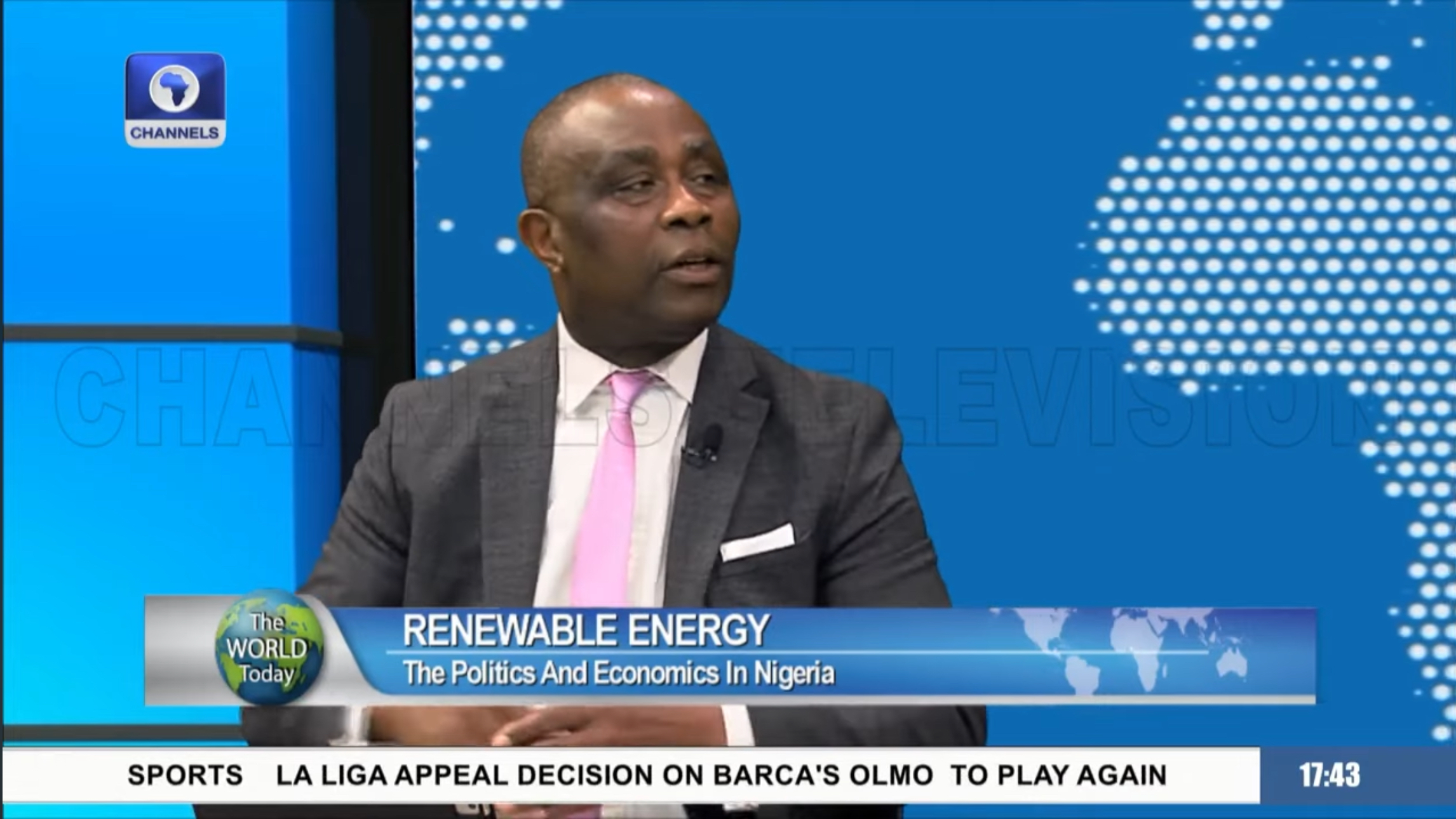
  • Invest in decentralised renewables to reduce dependency on the national grid. Belgium offers huge opportunities on renewables and entrepreneurs there and in Nigeria are ready to engage. Organise the table for them with business forum, trade mission, et cetera.

4. Unlock Food Security

  • Secure agricultural belts and provide affordable storage and logistics.
  • Support mechanisation and smallholder financing to bend food inflation downward.

5. Communicate With Candour

  • Nigerians are resilient, but not if kept in the dark. Citizens deserve clear, frequent, and honest communication about the economic roadmap and trade-offs.

Turning Stability Into Shared Prosperity

Nigeria stands at an economic crossroads. The stabilisation drive is working in parts. But citizenship legitimacy, which is the sense that reforms serve people, not just numbers, remains fragile.

As I often remind policymakers both in Europe and in Africa:

“Stability isn’t the destination. Prosperity is. Reforms must move from policy papers to people’s pockets.”

This requires patience, yes, but also precision. Nigeria doesn’t need to turn back. It needs to upgrade. It must upgrade with empathy, sequencing, and execution. If we get that right, this moment of pain can become the platform for shared prosperity.

The author, Collins Nweke is senior consultant international trade and researcher on economic diplomacy. A former three-term Green Councillor at Ostend City Council, Belgium, Collins is a fellow of the Chartered Institute of Public Management of Nigeria and the Institute of Management Consultant. He is also a distinguished fellow of the International Association of Research Scholars & Administrators, where he serves on its Governing Council. Collins writes from Brussels, Belgium.

Prisoners of Protocol

An Open Letter to the Honourable Ministers of Foreign Affairs of Nigeria and Belgium (On the Occasion of the 3rd EU-AU Ministerial Meeting of Foreign Ministers) by Collins Nweke | Brussels, Belgium 21 May 2025

Your Excellencies

The 3rd European Union–African Union Ministerial Meeting convenes today in Brussels. It has the commendable goal of advancing a 25-year-old partnership. I write to you not only as a Nigerian Diaspora leader and a Belgian of Nigerian roots. I also write as a bridge between two continents that share more than history, but a destiny.

The themes of today’s deliberations: peace, security, multilateralism, prosperity, and migration, are not merely policy points. They are lived realities for the millions of Africans in Europe and Europeans engaged in Africa. They speak to our aspirations. They equally touch on our anxieties.

A Personal and Collective Stake

I have lived the confluence of African resilience and European opportunity. I see the immense potential in the collaboration between Nigeria and Belgium. This potential exists both bilaterally and through the broader EU-AU frameworks. Yet, it is equally important to speak candidly about missed opportunities. This is particularly true in the realm of Economic Diplomacy. Much of the rhetoric has not translated into meaningful and inclusive outcomes.

Missed Opportunities

There has been goodwill on both sides. A leap forward occurred in the past three years. However, economic engagement between Nigeria and Belgium has still been far below its potential. Trade volumes fluctuate without a long-term strategic framework. Investment flows are lopsided. Dialogues around innovation, technology transfer, and capacity building often stall at pilot phases. Diaspora capital and expertise are underutilized assets in bilateral cooperation. They remain on the margins of structured economic diplomacy.

Belgium, with its expertise in green technologies, port logistics, and smart infrastructure, has much to offer a transitioning Nigerian economy. Nigeria, with its youthful population, creative industries, and vast market, is a gateway to Africa’s future. Yet our nations have not unlocked this constructive collaboration.

A Call for Bold, Pragmatic Collaboration

As Foreign Ministers, you hold the keys to fostering a new diplomatic architecture, one where trade and talent move together. An architecture where diaspora communities are institutional partners, and where prosperity is co-created, not simply negotiated.

A Two-Point Recommendation

1.     Establish a Nigeria–Belgium Bilateral Economic Diplomacy Council
This should be a structured, high-level platform. It should involve governments, the private sector, and diaspora stakeholders. It would move beyond trade fairs. This initiative would focus on sustained joint ventures and policy alignment. It would strategically target sectors like clean energy, agri-tech, and the digital economy.

2.     Create a Diaspora Innovation and Investment Window
Through embassies and missions, Nigeria and Belgium should jointly design programmes. These programmes should incentivize diaspora-led startups, skills transfer, and remittances. These remittances should be channeled into productive sectors. This is not charity. It is smart economics.

Conclusion

Excellencies, this is a moment to lead not from tradition, but from transformation. The EU-AU partnership must not only show a shared past. It must project a shared future. Nigerians in Belgium and Europe and Belgians in Africa are part of this future. Our governments should be partners in progress, not prisoners of protocol. As you deliberate on policies that will shape continents, I urge you to also listen to the diaspora. They are the voices of those who straddle both. We live the consequences of your decisions and embody the potential of your vision.

Respectfully yours

Collins Nweke
Advocate for Fair EU-Africa Economic Relations | Senior Consultant Nigeria Belgium Luxembourg Business Forum

The Culture Bridge We Try to Build

I am a (grand)father. But long before that, I was a first generation diaspora. I carried not just a suitcase. Instead, I brought a whole continent of stories, customs, fears, and hopes. I carried them across the ocean, from Nigeria to Belgium.

Crossroads of heritage

When I arrived in Europe, I knew I was entering a world that spoke a different language. Not just French or Dutch or German. But a language of culture, of history, of what it means to belong. And yet, I stayed. I worked. And we raised a family.

Our sons were born here. Belgium is the only home they have ever truly known. From the time they were old enough to walk, we tried to raise them on two legs. One planted in the orderly cobblestones of Europe, and the other in the red earth of our Igbo heritage. We visited Nigeria reasonably often. Christmas in Lagos, New Year in Ichi, Nnewi. Easter in Abuja, Iwaji and Ifejioku back in our Igbuzo hometown. They drank Zobo. But also Fanta in glass bottles, tongues painted orange, to their delight. And they learned to greet elders in Igbo: Omogwu, Oliofe, Akukalia, Amuapa,…They knew the songs. They danced at Ibunmanya traditional marriages. They buried their fingers in pounded yam and egwusi soup. They sometimes even asked for more jollof rice.

But by the time the older son turned 15, the visits stopped.

Nigeria had started changing. But they also started making their own Easter, summer, and Christmas plans with their friends.

Did Nigeria really change or it revealed more of what it had always been: fragile, violent, neglected? Our homeland still wakes early to call upon the ancestors on our behalf. My own father is now nearing the sunset of his life at 98. Meanwhile, mother’s mother, 101, in Ichi, still remembers the Biafran war like it was yesterday. But today, we can’t even say for certain they are safe.

My son is now a father himself. His son – my grandson – is five. A lively, curious boy with the wild laughter of a hyena cub and the soft curls of his Belgian mother. My son wants him to know Nigeria too like he did. He wants to stop and show him the Atakpo river before entering Igbuzo. He’d like to take him to Okpuzu river and drink from the stream. Maybe even wash his head and face, calling on goddess Oboshi to take charge, fight his battles. He probably wants to take a dive into the river like I did with him. He wants to have his head touched and blessed by the great-grandparents whose blood runs in his veins. But the road home no longer feels like a road. It feels like a battlefield.

“Daddy,” he said to me yesterday over breakfast, voice low, pained. “How do I take my wife and son into a country where churches are bombed? Roads are unsafe, and children are kidnapped from school?” How can I explain to my Belgian wife? She doesn’t understand. It is considered fine when a police officer points an AK47 at you at a traffic checkpoint. The officer’s eyes are deep red and stone-faced. Yes I survived it. It felt cool to me at the time because I had seen it in Nigerian films. Nollywood playing out live. Yes, I saw it often in the Naija movies. You and Mummy watched these films. You got us to watch them too. It served as a partial introduction to our ancestral homeland. They do not have all of that orientation”

I had no answer. I am his father. Fathers are supposed to have answers. Frustrating!

Instead, I gave him what we fathers often give when our strength fails: perspective wrapped in silence. I tried to tell him, gently, that we are not the only ones caught between worlds. Sometimes, we must carry our culture not in our luggage. We carry it in our habits, in our stories, and in how we name our children. I reminded him that we named him Tonna and his brother Chidi. We must carry our culture in what we teach them to love.

Still, I see the ache in his eyes. The guilt of a son who can’t take his own child to see his roots. The fear that something irreplaceable is being lost in translation.

He loves Nigeria as a land and the people in it. He blames Nigeria, its broken politics, its indifferent governance. He even praises Ibrahim Traoré of Burkina Faso. I don’t blame him. Nigeria has failed many of us, repeatedly. Yet I find myself defending the homeland still. Not out of naivety. But out of something older: loyalty, or the stubborn refusal to give up on the soil that birthed me.

My grandson asks, “Nnanna, where is Nigeria?” and I tell him, “It’s where your name Nweke comes from. It’s the reason you dance so well. It’s the energy in you and the loudness of your laughter. It’s the place where your great-grandma sings to the moon and greatgrandpa pours libations to the gods. My mother, your Nne-Nnanna of blessed memory, rests there.”

I don’t know if he understands. But I hope one day he will. I also nurse the distant hope that he will someday meet his great-grandparents before they join Nne-Nnanna and their ancestors.

This story is not just ours. It belongs to millions like us. African families straddling two continents, trying to stitch together identity with threadbare fabric. Europeans raising children with heritage they barely comprehend. Diaspora parents mourning the loss of what they couldn’t pass on, and children resenting what they never received.

But here’s the truth: culture does not die in silence. It dies in forgetting.

So, we must keep remembering. We must keep telling the stories, even if we can’t visit the places. For now! We must cook the food. We must speak the names. We must light the ancestral candles. We must even pour libations that we do not fully understand or agree with their import. And then, we must hope that one day; when the guns fall silent and the roads are safe; our children and their children can walk back across the bridge we’ve spent our lives trying to build.

The author, Collins Nweke is Belgian of Nigerian roots. A former Green Councillor at Ostend City Council Belgium, he is a husband an active father and grandfather.