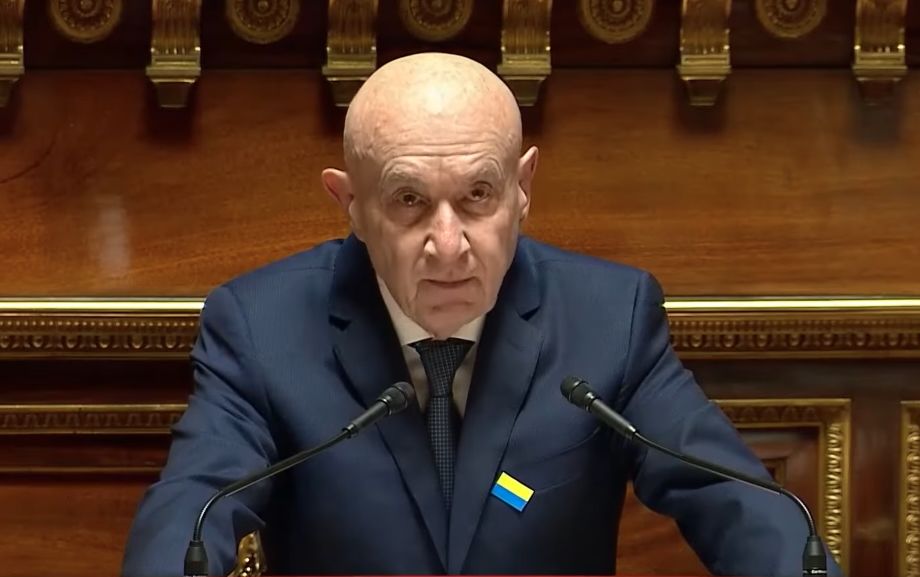
Understanding the U.S. Visa Restrictions on Nigerians Linked to Anti-Christian Violence

Collins Nweke commends the US shift from “Christian genocide” to “anti-Christian violence” framing, calls visa restrictions a targeted accountability tool addressing Nigeria’s impunity culture, not a national sanction.

In his Proshare Op-Ed, Nweke argues language correction reflects diplomatic maturity, recognising Nigeria’s complex security reality, communal clashes, banditry, and extremism affecting all groups. He urges Nigeria to prosecute perpetrators of violence, strengthen security accountability, build a conflict-prevention architecture, protect witnesses, and communicate transparently to avoid future sanctions.

Nweke also spoke to the topic on RadioNow FM, providing some nuanced arguments.

Global Leaders Push for Sweeping World Trade Organisation Reforms

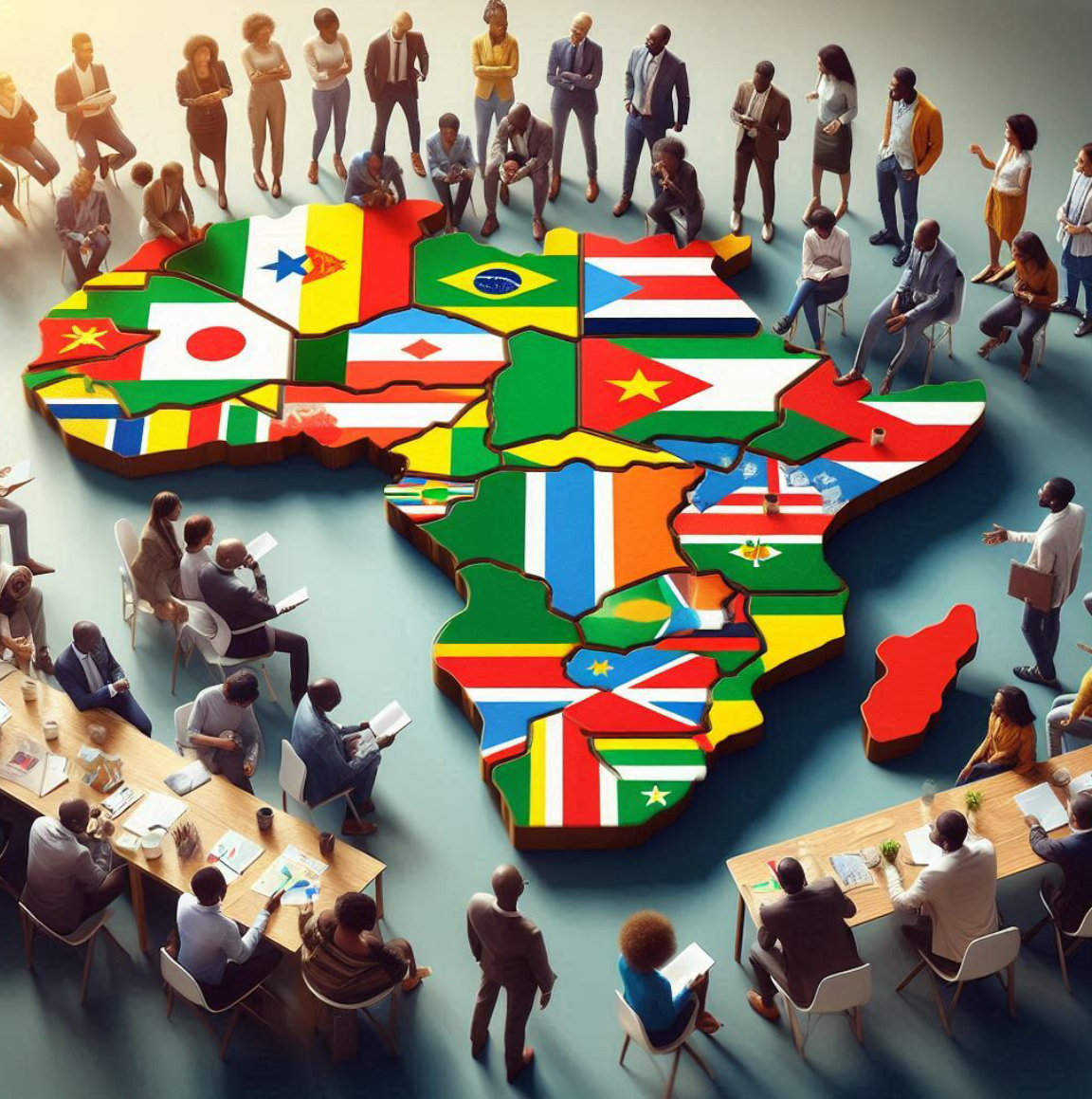
As global leaders push for sweeping World Trade Organisation (WTO) reforms, senior international trade consultant Collins Nweke warns that the debate is overlooking a crucial force, the Diaspora. He argues that multilateralism cannot be rebuilt using outdated systems while the technical expertise and economic influence of Diaspora professionals remain sidelined.
Collins Nweke, who is also the author of Economic Diplomacy of the Diaspora, argued his case in an opinion editorial, Reforming the WTO: Why the Diaspora is the Missing Diplomatic Muscle of Global Trade.

Innocent Semosa, also spoke to Collins Nweke for Channel Africa, a South African Broadcasting Service radio.

Nigeria leads Africa in oil exports to the United States

Nigeria is leading Africa in oil exports to the United States (US), supplying $2.57 billion worth of crude between January and August 2025.

According to reports, the West African nation accounted for more than half of all African crude imported by the US during the eight months, shipping 33.23 million barrels out of a total 60.75 million barrels, or 55% of all African crude imports into the US this year.

Thami Ngubeni spoke to Senior International Trade Consultant and Author of Economic Diplomacy of the Diaspora, Collins Nweke.

Opening Remarks Nigeria Week 2025

Opening Remarks Nigeria Week 2025

As Patron of The AfrikaFora, it is my honour to welcome you to Nigeria Week 2025. This week is not just about a country, but about an idea. It is a dream and a responsibility. As I stand before you, not only as Patron, but as someone who has journeyed through sixty years of life, forty years of career, and the privilege of mentoring many and being a grandfather, I am reminded that:

Legacy is not measured by the titles we collect, but by the lives we touch and the futures we help shape. At sixty, I see that true impact is not what we leave behind, but who we lift as we journey forward.

Our theme this year – Nigeria: The African Dream Waiting to Happen – is both a celebration and a challenge. It reminds us that Nigeria is not just a nation-state on the western flank of Africa. Nigeria is a continental experiment in scale, diversity, resilience, and possibility.

Our menu today includes two musical interludes. You will be served these in the course of the day. In them you’d live the glamour and grandeur of Nigeria. The interludes depict a land of over 220 million people, unmatched intellectual capital, cultural dominance from Nollywood to Afrobeats. More than that is  an army of Diaspora remitting more than the nation earns from oil, Nigeria has all the ingredients to be Africa’s moral compass, economic engine, and cultural lighthouse.

And yet; the dream continues to wait.

The dream waits because potential is not the same as progress.

The dream waits because talent without structure becomes frustration.

It waits because a people cannot truly rise if leadership keeps them crawling.

That is why today’s sub-theme goes straight to the heart of the matter:

The Governance Question: Why Good Leadership is Nigeria’s Greatest Missing Link.

We are not short of ideas, or experts, or blueprints. We are short of governance that works. We have produced geniuses, but not systems. We have mastered survival, but not transformation. Nigeria’s tragedy is not a lack of capacity – it is the misplacement of it.

But here is the good news: the missing link is a fixable link.

The Diaspora Dimension

And here, the role of the Diaspora becomes central. The AfrikaFora itself is a living example – a Diaspora-initiated platform, activated by the conviction of an African woman, Madam Winifred Uloaku Gaillard, powered by Africans abroad who have refused to be distant observers of the continent’s future. Across the world, the Diaspora is no longer just sending remittances; it is sending back knowledge, networks, technology, investment capital, and perhaps most crucially, a renewed civic imagination.

This is why my forthcoming book, Economic Diplomacy of the Diaspora, argues that the Diaspora is not a footnote to African development. It is a strategic actor in Africa’s rebirth. When harnessed, the Diaspora becomes not just a resource but a force multiplier for governance reform, private sector expansion, and global rebranding of the African story.

Nigeria Week is not a talk shop. It is a workshop disguised as a seminar. It is a village square of thinkers and doers. It is where policy meets people. Where Diaspora meets homeland. Where critique meets action.

The world has enough conferences that diagnose Africa’s problems.

What we need – and what The AfrikaFora insists on – are conversations that end with commitments, not just comments.

So I invite you, not as spectators, but as co-architects.

Not as critics of Nigeria, but as shareholders in the African idea.

Not as consumers of policy, but as makers of it.

Let me be clear: fixing Nigeria is not a Nigerian project. It is an African imperative. A stable, functional, and visionary Nigeria changes Africa’s bargaining power globally. It unlocks continental trade. It strengthens ECOWAS. It fuels the creative economy. It deepens South-South diplomacy. It makes the African Union less of a club of presidents or a club of tired old men. But more of a community of people.

If Nigeria rises, Africa rises differently.

If Nigeria falls, Africa bleeds quietly.

So today, we gather not to debate whether Nigeria can become the African Dream. We gather to ask what we must do to make it so.

Over the next couple of hours, you will hear from thought-leaders, nation-builders, reformers, and everyday citizens who refuse to allow Nigeria’s potential to remain a proverb. I urge you: listen, challenge, contribute, document, commit. Because the measure of this event will not be the brilliance of the speeches, but the boldness of the follow-up. As a grandfather and mentor, I have learnt that the most enduring legacy is not a monument of stone, but a generation inspired to dream, to build, and to lead with courage and compassion.

Let us make this the year the dream stops waiting. Let the dream starts happening.

On behalf of The AfrikaFora, I declare Nigeria Week 2025 open.

Thank you.

And may the work begin.

Epilogue to the Brussels Business Forum 2025

As dawn breaks over Brussels, our third Nigeria Belgium Luxembourg Business Forum draws to a close. One by one, we see our colleagues off. Some bound for the airport, others for a quiet tour of our beautiful Belgium and its neighbour Luxembourg. The city that just yesterday pulsed with dialogue and discovery now exhales in gratitude.

Looking back, this Forum was not merely an event. It was an awakening. It was a vivid demonstration of what happens when nations meet not to transact, but to transform. Over two days of compelling panels; from healthcare and education to agriculture, infrastructure, and technology;  one unifying truth emerged: partnership is the new power, the new currency.

Our Closing Dinner on Thursday, 23 October, was the perfect crescendo. As glasses clinked, mingling with the aroma of egusi and Jollof rice, friendships deepened, we knew that those fireplace conversations held, would soon become contracts, collaborations, and catalysts. It was not farewell, but a beginning.

Then came the company visits. There, dialogue met practice. In Antwerp, under the capable leadership of my colleague Thomas De Beule, participants witnessed the remarkable operations of DEME Group, a global leader redefining sustainability in dredging, renewables, and marine infrastructure. There, Nigeria’s delegates saw not just technology in motion but partnership in action. That is the kind of partnership that can help power a greener future back home.

Meanwhile, in my adopted hometown of Ostend, I had the honour of leading a delegation to GEOxyz and the DronePort West-Vlaanderen, housed within the campus of the Ostend School of Aviation. What we witnessed there was nothing short of inspiring. Delegates saw firsthand unexplored potentials for collaboration in the blue economy, agribusiness, maritime innovation, and tech transfer. Delegates from both the private sector and the Ministry of Aviation and Aerospace Development of Nigeria could feel the possibilities vibrating in the air. These encounters reminded us that the ocean between Belgium and Nigeria is not a barrier. It is a bridge waiting to be crossed.

On a personal note, this Forum transcended the realm of trade facilitation. It spoke to something deeper. And that is the delicate art of linking my birth country with my adopted homeland. To stand at that intersection, where cultures converge and common purpose flourishes, is to witness the very essence of economic diplomacy of the diaspora. That is the very same philosophy that inspired my upcoming book of the same title.

When I first approached my colleague, Silke Beirens about onboarding her office, Fabrieken van de Toekomst for the Business Forum, little did I know that the path will lead me to Stefaan Verhamme, International Affairs Manager at our West Flemish regional economic development company, POM-West-Vlaanderen. Stefaan proved with a formidable small group of regional talents he brought together to host our delegation in Ostend, that innovation is not about who has the biggest lab. It is about who has the boldest imagination. As I took a bite into the homemade garnalenkroket we were served while awaiting lunch, I thought to myself, what a bold imagination we have just witnessed at GEOxyz and the DroneDock!

As we close this chapter, I am filled with hope. Hope that the connections built in Brussels will ripple across Lagos, Abuja, Antwerp, and Ostend. Hope that the handshake between Africa and Europe will grow firmer, guided not by charity but by shared prosperity. And hope that each participant departs not with memories alone, but with a renewed mandate. That of turning dialogue into development. We now realise that innovation is a mindset, not a department. Together, Belgium and Nigeria can turn digital dreams into global realities. And we must keep the spark alive.

The 2025 edition of the Nigeria Belgium Luxembourg Business Forum has ended, but the journey continues. The conversation deepens. The bridges strengthen. Like I concluded in my closing remarks at the Panel Sessions, every panel spoke one language in all the sessions. They spoke the language of partnership. Whether in health, agriculture, infrastructure, or innovation, there is a clear universal message: no economy grows alone. And as always, I remain humbled to play my small part in growing them.

The Annual Business Forum Ritual in Brussels is Here

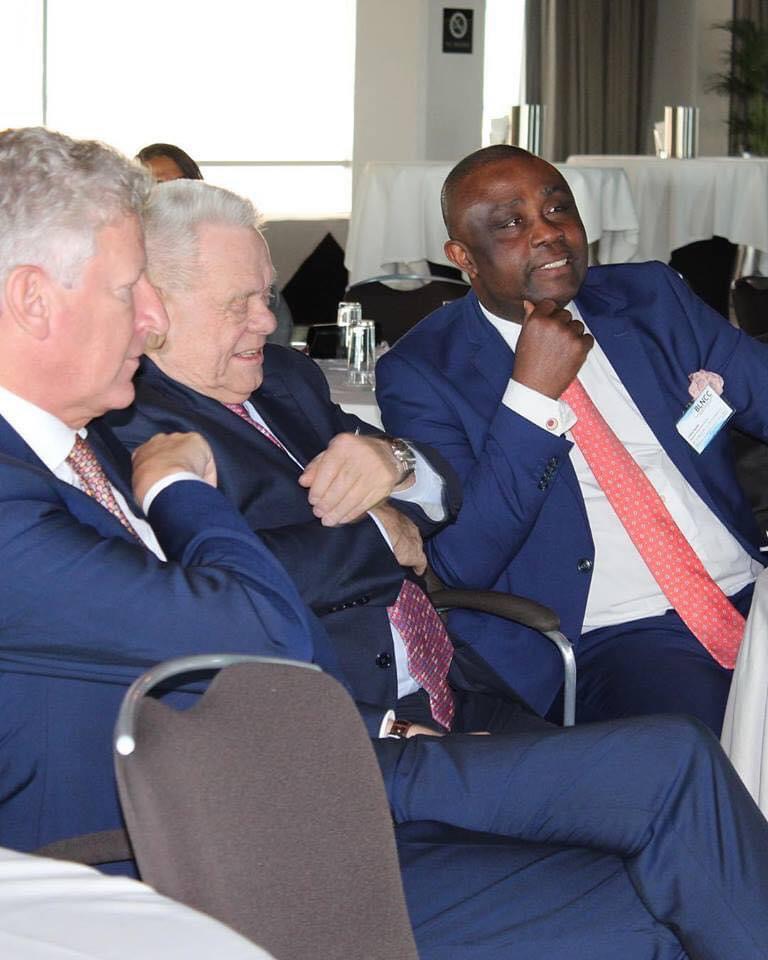
The place is the magnificent Tangla Brussels. The Hall is set, the Panel Fire Place is installed. And the Deal Rooms are ready. Now waiting for the guests — some 150 carefully selected captains of industries, trade facilitators, and technocrats —- to start arriving. For several years I have been on the International Trade space. And for the last couple of years, I’ve fulfilled the role with gusto as Senior Consultant with the Nigeria Belgium Luxembourg Business Forum. This year I will also moderate the Panel Sessions, which are integral parts of the Business Forum, with my sister and friend, Dr Blessing Enakimio.  

In many ways, the forthcoming publication of my book Economic Diplomacy of the Diaspora has drawn oxygen from events like the Nigeria Belgium Luxembourg Business Forum. It is in platforms such as this that theory meets practice. Where the abstract ideas of economic diplomacy are tested, stretched, and ultimately transformed into tangible partnerships that impact economies and lives.

As a Senior International Trade Consultant and moderator of this year’s Forum, I find renewed conviction that diplomacy today is no longer confined to embassies or official summits. It lives in the boardrooms where business leaders negotiate shared prosperity, in the classrooms where new knowledge is forged, and in the creative corridors of our Diaspora communities who act as living bridges between nations.

This Business Forum continues to serve as one of Europe’s most vibrant platforms for connecting Nigerian enterprise with Belgian and Luxembourgish innovation. All of it anchored by the 61 year old CBL-ACP Chamber of Commerce. The conversations across our four panels; from healthcare and education to agriculture, infrastructure, and digital transformation; reaffirm that collaboration remains the true currency of progress.

To every partner, participant, and policymaker shaping this dialogue, I say thank you. Each discussion, each handshake, each shared vision contributes a fresh chapter to the broader story of Economic Diplomacy. This is a story that belongs to all of us.


Collins Nweke

Senior International Trade Consultant

Moderator, Nigeria Belgium Luxembourg Business Forum 2025

BOTSWANA’S PROPOSED AFRICAN ALTERNATIVE TO CAPITALISM AND SOCIALISM

by Professor Chidi G Osuagwu

PROLOGUE

A Civilization: organised set of Algorithms for ascensional development and sustenance of human society is as advanced as its most advanced knowledge-seeking and problem-solving Algorithm. With her Naturalism and Afa Algorithm Africa possessed the most advanced known Civilization of the Ancient World.  Afa, a fractal-binarist system for holistic problem-solving, has 256 possible solutions to a given problem. The Chinese I-Qing Algorithm, which was next most sophisticated known, has 64 solutions. Most other cultures had diverse Oracles, claiming ‘god’ as their Algorithm, with no known clear methods or solutions, but entropy wars. When Africans introduced Inoculation in 1721 Boston, America, European settlers rioted; wondering how “Contagion could cure contagion”. That was the civilizational relationship between Europe and Africa at the time! Unfortunately, for Humanity and Earth’s Biosphere, barbaric Martial Cultures, usually, destroy Algorithmic Civilizations. Thoth prophesised destruction of African Civilization by West Eurasians. This is the sad fate of Africa’s Nature-Afa Civilization. Happily, at this turn of the 21st Century, Africa’s Youths have risen to restore African civilization as Thoth also prophesied. This was the dream of Olaudah Equiano, Haitian Revolutionists, Aime Cesaire and very many other ancestors. Africa’s defeat of Covid-19 with African Phytomedicine has, thanks to heroes like President Andrey Rajoelina and The Madagascar Protocol, been a morale booster along this Mission-pathBotswana President Duma Boko’s call for a return to African Socioeconomics is in this Spirit.African Renascence is on the March! Africa posits an Omnipolar World Order!!

INTRODUCTION

A people’s Archetype is their model of Cosmos Construction by Nature’s God and Design for modelling World Constructions by Humans. Izu, the African Archetype, models Uwaizu; the African Cosmos. A people’s Archetype embodies their picture of the world or Cosmology. A people’s Divination Algorithm (Ultimate Knowledge-seeking and problem-solving protocol) is a fair indicator of the level of their advancement as Civilization. The Fractal-binarist Niger-Congo Afa Algorithm was the most advanced knowledge-seeking protocol known to the ancient World. Afa Episteme states that for any real problem confronting humans there are 256 possible solutions (the Chinese I-Qing that is next arrived at 64 solutions). 

When Botswana’s new President, Duma G Boko, recently renounced Capitalism and Socialism in favour of return to African traditional ‘-ism’, the question that arises is ‘What does he mean?’ The short answer is that he renounced the non-scientific Greek Delphi and Indian Jyotish Oracular, ‘god’-as-Algorithm, Knowledge system of West Eurasia, and the socio-economic doctrines they generated, in favour of Diatola (Sestwana term for Afa) knowledge system and the Botho sociology that inheres therefrom. This symposium is to, with associated data, elaborate on these facts. 

NATURALISM, AFRICAN ARCHETYPE AND AFA 

African Naturalism

The second century AD Roman Berber scholar Lucius Apuleius wrote a both, which currently bears the Augustine of Hipo given name of The Golden Ass. In that book Apuleius asserted one fact: All peoples of the World have some levels of ideas of Nature. But only Africans (from Egypt in the North to the southern interior) know, understand and live by the laws of Nature. It is on this foundation that ancient Africans developed science as ‘mimicry’ of Nature…a bionic phenomenon. As the Greeks recorded, the World’s first scientists were Africans. This realisation is consistent with Africa’s ab initio Naturalism.

An archetype is people’s pictorial embodiment of their worldview…Cosmology. It is the physical embodiment of how the world is constructed and model of how to do constructions in the World. There are three major archetypes of the ancient World of Africa and Eurasia. Izu, as Igbo call it, is the African Archetype. It is the four-cusped Hypocycloid, which can be generated by passing light through tinted-glass. Swastika is the West Eurasian Archetype. Tai-chi-tu is the East Eurasian Archetype. Of the three, only the African Archetype can be physically demonstrated, which is consistent with the status of ancient African science. 

Afa Algorithm: Spirituo-Intellectual Ranking of Beings

  1. f(n) = n; Gorilla (The Beast)/Ofeke…1; 2; 3; 4; 5; 6 (Arithmetic, zero-sum, realm of Ego).
  2. f(n) = 2^(n-1); Oha (Ofeke + Dibia) …1; 2; 4; 8; 16; 32 (Basis of Kolanut offerings/connectedness).
  3. f(n) = 2^n; 2; 4; 8; 16; 32; 64 (Basis of Chinese I-Qing Divination Algorithm).
  4. f(n) = 2^[2^(n-1)] = Dibia and Spirits… 2; 4; 16; 256; 65,536; 4,294,967,296. (Hypergeometry; Hence, after God is Dibia).
  5. f(n) = 2^[2^(+∞)] = God … +∞ (Infinity/Realm of imponderability).

As there is the Afa Algorithm in the Niger-Congo, there is Seked Algorithm (the protocol for geometries) in the Nile Valley. The Algorithms powered ancient African civilizations. These naturalistic civilizations had developed Human society more thoroughly than anywhere else. 

Sometimes in the second century BCE Thoth, the Egyptian Spirit-of-Knowledge and patron of Learned men and visioners, foresaw and foretold that uncivilised West Eurasians (Aryans and related peoples) would invade and destroy Egyptian/African civilization (this information was known among knowledge men across Africa). This History shows, duly, happened. Thoth also foresaw, and foretold, that an African Renascence would occur. Here we are! When, therefore, President Duma Boko, like other renascent youth across Africa, announced that Africa has something better than the social disease Capitalism, and its failed medicine Socialism, we rally here to assert the Truth in his claims.

One knows enough of Botswana to know that Diatola (Afa) knowledge-seeking and problem-solving Algorithm exists as well as Botho social philosophy. Anthropological and socioeconomic data from the less decivilized !Kung San that African civilization is asleep in Botswana, like elsewhere in the Continent, and can be awoken.

CAPITALISM AND CRISIS OF WEST EURASIAN SOCIOECONOMICS

Economics has two broad aspects: Production and Distribution. Production, mostly, involves engineering and management techniques upon which most people, easily, agree. Most contentious problems of Economics arise, mostly, over distribution of the end-products of production…Utilities. The problem of Economics is the problem of utilities distribution. Balancing Productive Incentive and Distributive Equity is The Prime Economics Problematic. How to minimise disagreements and achieve timely agreements on what to do is the reason decision-making mechanism is vital to socio-economic systems (Growth as an economic paradigm and necessity is a West Eurasian social panel-beating Paradigm; a fake cure for sickly capitalism).

Consensualiam As African Decision-making Algorithm.

So, naturalistic decision-making (Democracy) and utilities-sharing (Economic Distribution) Algorithms are two key Devices Botswana and Africa urgently need. Scholars who investigated affirm that African Democratic method is Consensualism. All-inclusive algorithm that weighs-in all opinion. The disorderly DuelocracyEuropeans brought to Africa as algorithm for Democracy is consistent with their zero-sum worldview but, totally: unnatural, un-African and dysfunctional. Our African Students Association, Youngstown State University, Ohio, 1976 realised, devised and employed what we called Ananse (Ghanaian word for Spiderweb/Network) Voting Method, AVM. AVM, like magic, dissolved unnecessary argumentations during meeting decisions or elections. Africa should note and revert to Consensualism. That plus Duad Representation: one-man-one-woman (a delegation of one is un-African) would dynamize African politics.

Capitalism is Zero-sum Socioeconomics Socialism Cannot Cure

Capitalism is contemporary term for a socio-economic system that incorporates the classical West Eurasian culture of Plunder-by-arms and or Plunder-by-guile. Socialism is a term for an empathetic socio-economic system that precludes Plunder from relationships without specifying measurable ideals. The African Erima socio-economic system has, like a Botho system, specified mechanisms and measurable ideals. To follow African polymathic Afa algorithm in societal construction is to effectuate a holistic and just social order.

 About 13th Century BCE, Moses’ Mammon Mandate to Semites = Plunder-by-guile = Usury Algorithm (Banking) = One leg of Capitalism.

525 BCE Persian Cambyses II invaded Egypt, later followed by Rome on the Aryan model = Plunder-by-arms = Martial Algorithm (Military Bases) = One leg of Capitalism.

Monetary Algorithm + Military Algorithm = Monetary-Military Complex Algorithm = Capitalism.

Capitalism is, functionally, a Plunder Algorithm that, continuously, transfers Wealth from Poorer to Richer of Society (Mathew Effect), which was perfected under the Roman empire.

Roma + Mammon = Romamona = Spirit of Capitalism (The Spirit Jesus Christ preached against and was crucified by Romamonists for attacking: “You cannot worship God and Mammon” he warned. The Roman empire created capitalism and unleashed it on the World, and Jesus Christ was the first anti-capitalist). 

In my December 2014 online essay “Obamanomics and Economics Beyond Cambridge”, I warned that the Western mind cannot understand and tame Capitalism, because its dynamics are beyond its zero-sum, arithmetic, worldview (They are cosmologically blinded and epistemologically exhausted). But Afa, crafted on a hypergeometric framework sees through the Mammon-machine that transfers wealth from Poorer to Richer as Jesus noted two thousand years earlier (a Christian capitalist is a fake or ignorant Christian!). Socialism is an ill-defined Algorithm that sought to solve the Mathew Effect (wealth-transfer from Poorer to Richer) problem of Capitalism. Below are data showing the patterns of wealth distributions by Capitalism and “Socialism”. Note that in the Obamanomics and Economics Beyond Cambridge essay I noted that my agemate, not then yet President Donald Trump, who was then relentlessly criticizing my nephew, then United States President Barack Obama, did not know much of what Socioeconomics was about. Since then, Donald Trump has been President and is about to become President again, but he still doesn’t know. It is beyond his inherited worldview and thoughtway, and not his personal fault. African Youths should Google and read that essay.

Table I: INCOME SIZE DISTRIBUTION COMPARING SOCIALIST AND CAPITALIST CONTEXTS

S/NoCOUNTRYYEARSQ1, %SQ2,%SQ3, %SQ4, %SQ5, %*Simplified Best Organizing Equation*
1SCANDINAVIA1970-11.116.520.423.828.2
200023445SQn = n + 1
2USA20153.18.214.323.251.1
2591533SQn = 2^(n – 1) + 1
3SOUTH AFRICA20142.44.68.516.568.0
2591768SQn = 2^(n*-1) + 1
4WORLD19901.001.502.408.8586.35
23518173SQn = 2^(n*-1) + 1

*First three member quintiles define approximating equation

Table II: REFERENCE QUINTILE INCOME SIZE DISTRIBUTIONS AND BOTSWANA

S/NoCOUNTRYYEARSQ1, %SQ2,%SQ3, %SQ4, %SQ5, %Simplified Best Organizing Equation*
1AI SUGGESTED OPTIMUM DISTRIBUTION20241015202530To balance Incentive and Equity 
23456SQn = n + 1
2!KUNG SAN (Botswana)197912.016.022.026.030.0
 345.56.57.5~ SQn = n + 2 (All decimals dropped)
3BOTSWANA20153.97.011.119.558.5
3591545~ 2^n + 1     (First three determined)
HADZA (Tanzania) THEORETICAL AND EMPIRICAL IDEAL201013.516.521.023.526.5
45678SQn = n + 3

ERIMA AND ERIMANOMICS

It is clear from Data on the Tables before us, on Botswana and South Africa, particularly, that President Duma Boko knows what he is talking about when he renounces European ‘Rhodes-Asian’ Socioeconomics in favour of the !Xaro Socioeconomics of the !Kung SanHe is familiar with both and can compare, as anybody else can compare on the above Tables. Does the African academy know what I am talking about? Yes, of course! We discussed these fundamentals at the University of South Africa in 2006 and the Library of Alexandria in 2016. Renascent Africa knows what She is talking about! The Ngaka in Botswana and Dibia in Nigeria know what we are talking about!

Without the resilience of African naturalistic socioeconomic systems there would be, after thousands of years West Eurasian onslaughts, no African society to talk about or talk from. In my book Erima: Towards a Just World, I gave outline of the Igbo Erima social system that has withstood the worst of assaults. The Odibo(apprenticeship) system that requires the mentored to mentor others to have any social recognition at all. The Ozo nobility system that does not ennoble the crook but demands Honest service to the community to earn. The relentless search for Amamihe, knowledge. The Ikenga-Ihite fractal-binary structuring of society, at all levels, that makes it a super-resilient network, etc, etc. Africa knows what She is talking about.

HYSTERESIS: AFRICAN PAST AND FUTURE 

“Hysteresis refers to the phenomenon where the response of a system to an external influence depends on the previous state or history of the system. In other words, the system’s behaviour is path-dependent, and it can exhibit different responses to the same stimulus depending on how it got to its current state”. This quotation outlines a phenomenon, which cynics and other misguided peoples want Africa to ignore. That Slavery was in the past and has no present socio-economic consequence to anybody. That colonialism was in the  past and has nothing to do with ‘Investor’ as loot-recycler, despite Simon Kapwepwe’’s clear warning on the danger? African youth should understudy the phenomenon of Hysteresis and be properly guided. Data on the tables above indicate, in agreement with hysteresis, that History never forgets but takes memory into account in all responses and at all times.

CONCLUSION

Thoth prophesied, millennia ago, that West Eurasian invaders would destroy Africa’s Nature-based and knowledge-driven civilisation. That came to pass and is still ongoing. Thoth prophesied, also, that Africa’s tribulations shall come to an end and there will be a Renascence of African civilization. There is, currently, intimations of the fulfilment of that prophesy, too. The Spirit of African Renascence animates African Youth. President Andrey Rajoelina’s heroic lead of Africa to use African Phytomedicine and the Madagascar Protocolto fight Covid-19 is a case in point. Other African youths are astir worldwide. Botswana President Duma Boko joined the crusade by advocating the renunciation of malfunctional West Eurasian zero-sum socioeconomics and resuscitation of African life-promoting socioeconomics. This paper has interpreted and amplified what he said. The paper highlights the Nature-Afa framework on which his call is based and emphasises the correctness of his advocacy. Based on Nature’s laws and Afa algorithm of hypergeometric knowledge-seeking and problem-solving, African socioeconomics would be best for Africa and Planet Earth. The data are supplied to validate this surmise. Africa and the World are at an inflection point of survival and History. Africa posits an Omnipolar World Order!

The author, Professor Chidi G Osuagwu, is affiliated to African Centre for Biomedical Engineering Research, Owerri, Imo State, Nigeria.

Tax Ombud for Nigeria: Navigating a Promising Reform in a Distrustful Context

This piece is the abridged version of the main analysis, available here under the same title authored by Collins Nweke and published by Proshare.

Nigeria’s planned establishment of a Tax Ombudsman represents a potentially transformative intervention in tax governance. It signals an ambition to align fiscal policy with principles of fairness, transparency, and accountability. Yet the structural, political, and institutional realities of Nigeria’s tax environment pose serious implementation risks. This paper draws lessons from comparative jurisdictions; especially Belgium, the European Union, and Canada; to assess likely pitfalls and propose design safeguards for an Ombudsman that can genuinely bridge the trust deficit between citizens and the state.

Context: A Reform Anchored in Trust

Nigeria’s fiscal system has for decades suffered from an imbalance between ambition and administration. While successive governments have sought to diversify revenue away from oil, taxpayers remain skeptical that their contributions translate into public value. The Federal Government’s 2025 tax reform agenda, which envisions both a Nigeria Revenue Service (NRS) and a Tax Ombudsman, is therefore as much a political statement as a fiscal one: the state seeks legitimacy through fairness.

Comparative Contexts: Lessons from Belgium, the EU, and Canada

Belgium’s Tax Conciliation Service is accessible and free but non-binding; the EU Ombudsman demonstrates radical transparency and systemic review; and Canada’s Taxpayers’ Ombudsperson operates within a codified Bill of Rights. Together they show that credibility comes from independence, timeliness, and transparency, not just existence.

Potential Pitfalls in Nigeria’s Implementation

Nigeria’s implementation risks range from weak mandates and institutional capture to jurisdictional fragmentation, data silos, and political discontinuity. Each of these can undermine the Ombud’s credibility unless addressed through statutory safeguards and operational standards.

Design Blueprint: Elements of a Credible Nigerian Tax Ombud

Key features include legal clarity, structural independence, service-level standards, one-stop intake, data integration, systemic oversight, citizen outreach, and measurable accountability loops.

Political Economy Realism

Institutional reform will provoke resistance. Success depends on positioning the Ombud not as a control mechanism but as a trust-building instrument that aligns citizen rights with fiscal responsibility.

Metrics of Success

Performance indicators should measure response times, accessibility to MSMEs, agency compliance with recommendations, and taxpayer satisfaction levels. These metrics translate trust into measurable governance outcomes.

In the end, it is expected that decades from now, Nigerians and the world will look back and dub this time the Taxation to Trust Era. Democratic taxation is not about extracting revenue. It is about reciprocity and trust. When citizens feel heard, they comply; when they feel cheated, they evade. The Tax Ombud could therefore become the human face of Nigeria’s fiscal reforms.

Belgium shows the virtue of accessibility; the EU, the power of transparency; Canada, the discipline of clear rights and timelines. Nigeria must combine all three: access, transparency, and enforceability; if its Tax Ombud is to transcend good intentions.

Done right, this institution could redefine taxpayer-government relations. Done wrong, it will be one more reform that began with applause and ended in silence.

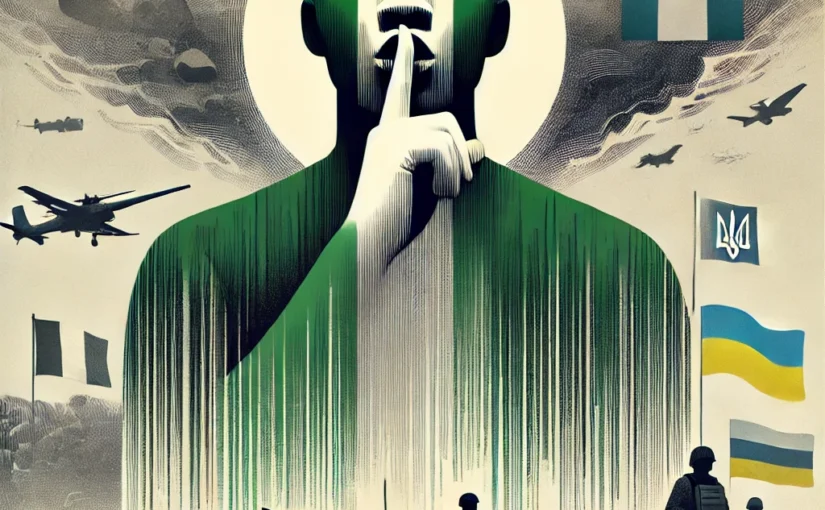
The Silenced Truth About Christian Genocide in Nigeria

When powerful Western media voices and religious activists began to speak of a “Christian genocide” in Nigeria, the government’s response was slow, muted, and largely reactive. The official rebuttals; including statements from the Ministry of Information, sporadic press briefings, and one or two well-written opinion editorials by aides; arrived long after the narrative had hardened internationally.

By the time these counter-arguments surfaced, they were drowned in a sea of emotive storytelling and digital amplification. The result was predictable: a partial truth took hold globally, while the complete truth struggled for oxygen.

The silence of the Nigerian state was not total. But it was strategic in the wrong way. Government seemed to confuse restraint with prudence, diplomacy with denial. The failure was not in the message. The failure found home in the absence of a consistent communication strategy. In the modern information ecosystem, a slow truth is as good as a lie.

The so-called “Christian genocide” narrative did not arise from nowhere. It fed on the vacuum created by Nigeria’s inability to tell its own story convincingly and compassionately. To outside observers, Nigeria looked indifferent to the suffering of Christians in the North and Middle Belt. The truth, however, is far more complex, if not far more tragic.

Understanding the Context Beyond the Label

There is no doubt that Christians have been brutally attacked in Nigeria, often in churches, schools, and farms. But so have Muslims, traditional worshippers, and adherents of no faith at all. The same terrorists who desecrate the Cross have also bombed mosques during Friday prayers. Communities in Katsina, Zamfara, and Sokoto, predominantly Muslim, have been ravaged by the same banditry that devastates Christian enclaves in Plateau and Benue.

The tragedy in Nigeria is therefore not a religious war but a national crisis of insecurity. It is a story of state fragility, not state policy; of criminal opportunism, not divine persecution. Yet when Nigeria fails to tell this story with clarity and empathy, others tell it with passion and distortion.

The Cost of a Reactive Communication Strategy

Nigeria’s official posture has too often been defensive, bureaucratic, and emotionless. Press statements reciting security statistics do little to heal wounds or convince sceptics abroad. Silence in the face of viral narratives is no longer an option. In the digital age, communication is not a luxury. It is a weapon of national survival.

Reactive communication does three dangerous things:

  1. It leaves victims unheard, allowing fringe activists to monopolise their grief.
  2. It emboldens misinformation, turning complex conflicts into simplified religious propaganda.
  3. It erodes global trust, exposing Nigeria to sanctions, political pressure, and reputational damage.

Reclaiming the Narrative With a Five-Point Policy Pathways for Nigeria

To re-anchor the Christian Genocide conversation in truth, Nigeria needs a multi-layered policy approach. It has got to be one that de-polarises the frame, acknowledges real atrocities, and protects all victims regardless of creed or colour.

  1. Institutionalise a Strategic Communications Unit

Within the Presidency and the Ministry of Foreign Affairs, a dedicated Strategic Communications Unit should coordinate Nigeria’s messaging on sensitive global issues. It must engage real-time with foreign media, think tanks, and rights organisations, deploying verified data and human-interest stories that show the full picture. Similar capability was domiciled in the office of the National Security Adviser (NSA). That they had it before but diluted it over time, indicates that it could be revamped and instrumentalized for today’s imperatives.

  1. Promote Interfaith Accountability

Rather than allowing Christian or Muslim leaders to speak past one another, Nigeria should facilitate joint statements, interfaith fact-finding missions, and shared appeals for justice. A united moral front blunts divisive foreign narratives and builds local trust.

  1. Empower Independent Investigations

Government credibility grows when it invites scrutiny. Independent, well-funded commissions on religious and communal violence; comprising jurists, clergy, and civil society; can generate credible data that international partners will respect.

  1. Engage U.S. Policymakers Proactively

Nigeria’s diplomats must shift from reactive lobbying to proactive engagement. This includes regular briefings to the U.S. Congress, USCIRF, and faith-based networks, backed by transparent updates on prosecutions and victim support. Only evidence, not rhetoric, can disarm the calls for sanctions.

  1. Humanise Security Reporting

Behind every attack is a human story. A story that transcends faith. Government media should amplify these stories of shared suffering and resilience. A child orphaned in Zamfara is not less Nigerian than one in Plateau; their tears carry the same weight.

Beyond Denial: The Moral Imperative

The Nigerian state does not have to deny atrocities to defend its image. It must instead show the world that it cares enough to confront them. Justice delayed, data hidden, or empathy withheld all lend credence to the genocide narrative.

Our moral duty is to protect all lives equally, to call evil by its name wherever it hides, and to communicate our actions clearly to our people and to the world. Because when the truth is silenced, it becomes the enemy’s loudest ally.

In the final analysis, Nigeria’s battle is not only on the ground. It is also in the realm of perception. Insecurity is a disincentive for Foreign Direct Investment (FDI) which the current administration has been passionately pursuing. Overemphasis on economic possibilities while not addressing the disincentives is comparable to pouring water in a bottomless pit. The world must know that this is not a war between Christians and Muslims, but between peace and chaos, justice and impunity. If Nigeria fails to tell its story with courage and compassion, others will continue to tell it for her. They often do not do so in good faith. The time has come to break the silence, reclaim the narrative, and let the truth speak for itself.