
The recent “strengthening” of the Migration, Justice, and Home Affairs (MJHA) partnership between the United Kingdom and Nigeria marks a pivotal, yet contentious, moment in Afro-British relations. Billed as a “landmark” in security cooperation, the deal introduces the “UK Letter”, dressed up as a mechanism allowing the UK Home Office to bypass traditional passport bottlenecks for removals, alongside a “Fusion Cell” to combat visa fraud.
While the optics suggest a robust defense of sovereign borders, a deeper policy analysis reveals a framework that is increasingly out of sync with the global shift toward Economic Migration Management. For a partnership that claims to be “forward-looking,” it remains stubbornly anchored in the mechanics of removal rather than the dynamics of human capital.
The Asymmetry of the “Security-First” Model
On the surface, the MJHA is presented as a reciprocal arrangement. However, the benefits are fundamentally asymmetrical. The UK gains a fast-track solution to a domestic political pressure point; the visibility of “failed” migration; while Nigeria receives vague assurances regarding business visa streamlining.
As a migration advocate, one must ask: is Nigeria merely serving as an enforcement arm for the UK Home Office? By facilitating the removal of thousands without addressing the structural drivers of their movement, we are treating the symptoms of a global economic disparity while ignoring the disease.
Shifting the Paradigm: Lessons from the ‘Arraigo’ and ‘Chancenkarte’
To move toward a more statesmanlike discourse, we must look to European neighbours who are pioneering more sophisticated, “rooting-based” models.
· Spain’s Arraigo (Social Rooting): Spain has recognized that after two to three years of residency, an individual is no longer just a “migrant” but a community member. Their model allows for the regularisation of status through employment, turning a “legal liability” into a Social Security-contributing asset.
· Germany’s Chancenkarte (Opportunity Card): Germany is moving toward a points-based flexibility that allows migrants to “switch lanes” (Spurwechsel) from irregular status to work permits if they possess the skills the German economy lacks.
These are not “soft” policies. They are economically literate ones. They prioritise the fiscal contribution of the individual over the prohibitive cost of deportation flights and diplomatic friction.
A Blueprint for “Migration for Development”
Nigeria should not be a passive “returning partner.” A truly strategic partnership would advocate for a Global Skill Partnership (GSP).
In this model, the UK would invest in Nigerian vocational training, creating a “dual-track” system. One group of trainees remains to strengthen the Nigerian domestic market, while the other is granted a legal, streamlined pathway to the UK. This transforms the “brain drain” into a “brain gain,” ensuring that Nigeria’s human capital is developed, not just depleted. The initiative, SkillUp Nigeria can be a credible partner in this model.
Furthermore, we must discuss Regularisation for Remittance. With remittances to Nigeria exceeding $20 billion annually, the economic stability of millions of Nigerian households depends on the diaspora. Instead of mass removals, the UK should offer “probationary status” to non-criminal overstayers. This keeps the wheels of the Nigerian economy turning and saves the UK taxpayer the immense cost of enforcement.
In the final analysis, Nigeria and the UK must move from enforcement to engagement. The 2026 UK-Nigeria pact is a functional tool for border security, but it is not a vision for a shared future. If the UK and Nigeria are to be true strategic partners, they must move beyond the “UK Letter.”
We must demand a transition from Security-led Migration to Investment-led Migration. Security is a prerequisite for order, but human capital is the prerequisite for prosperity. A modern, statesmanlike approach would value the Nigerian migrant not by the speed of their departure, but by the potential of their contribution.
Collins Nweke is the author of Economic Diplomacy of the Diaspora (2026) and Senior International Trade Consultant. He writes from Brussels, Belgium.
State visit as a tool of diplomacy is underpinned by a few core principles. It is unarguable that there are some of the principles that watchers of Nigeria-France relations will pay keen attention to, as President Tinubu of Nigeria touched down early evening on Wednesday in the cold Orly airport, France. One can’t help but be curious how Presidents Tinubu and Macron will have a frank and fair conversation yet avoid confrontational or unilateral demands. At least behind closed doors.
What about Regional Influence? Nigeria seeks to assert its leadership at least in the West Africa subregion, sometimes conflicting with France’s relationships with Francophone African countries. France’s deep ties with Francophone nations overshadows, if not undermines, Nigeria’s efforts at regional integration and leadership through the Economic Community of West African States (ECOWAS). How will this be navigated in the new French partnership with Africa? Or could this be one of the contentious issues that will be avoided?
Focusing on cooperative and respectful dialogue is desirable. And indeed there are much more that unite than divide both countries. But would it not be waste of Nigerian taxpayers money if Tinubu returns home without confronting a number of knotty issues all in the name of the principle of mutual respect? France is on an offensive to redefine its Africa partnership given the growing anti-French sentiment across the continent. The discerning Nigerians perceive France’s actions in neighboring Francophone countries as neocolonial. Also, Concentricism has always been the main thrust of Nigeria’s foreign policy, which denotes that Africa’s interests is at the heart of Nigeria’s interest. Little wonder Nigeria often advocates for African sovereignty and self-determination, which clashes with France’s historical influence in West and Central Africa. A redefined partnership with Africa that does not sufficiently take this into consideration will be short lived if it even manages to take off. Is this on President Tinubu’s agenda?
French-Nigerian Convergence
Before delving into the contentious issues in the French-Nigeria relations, it should be helpful to briefly touch on the areas where the two economies see eye to eye. There is agreement in principle on security cooperation for mutual benefits because both nations align on the fact that the sustainability of the warm economic and trade relations between them today, can only continue to be anchored tomorrow on a secure environment. While it could be said that there is alignment around the principles of climate change and environmental matters, there is disparity on the speed to be applied in achieving energy transition. Call it a nuanced disagreement. Finally, cultural exchange has continued to be tied to education and in part on youth development. Both countries value cultural collaboration, with France being a significant promoter of African art and culture. French institutions in Nigeria, like the Alliance Française, facilitate educational and cultural exchanges.
Press releases from both the French and Nigerian presidency is unlikely to touch on the sticking points but by identifying these contentious areas, Nigeria can approach its dialogue with France strategically, emphasizing mutual interests while addressing critical points of divergence.
Divergent policy areas
Truth be told, neocolonialism even if it is in perception, remains an issue that analyst of France-Nigeria relations continue to monitor. As mentioned earlier there is growing anti-French sentiment across Africa. This derives its origin from the perception of neocolonialism.Nigeria has often advocated for African sovereignty and self-determination, which clashes with France’s historical influence in West and Central Africa. France has loads of work to change that perception and Nigeria can leverage its Regional Influence to help France on this rebranding mission. The major negotiating point would be France’s deep ties with Francophone nations and how this has overshadowed Nigeria’s efforts at regional integration and leadership through ECOWAS, of which President Tinubu is the current Chairman.
Counterterrorism
While France and Nigeria agree on countering terrorism, there are differing approaches. Nigeria’s perspective was shaped by skepticism over the effectiveness of France’s military strategy in the Sahel and concerns over France’s dominance in shaping regional security policies. If France has no ulterior counterterrorism motives, this is a matter that can be resolved with reassurance and transparency on the part of France.
ECOWAS Economic Independence
Nigeria’sadvocacy for financial autonomy in the ECOWAS region, including the proposed ECO single currency, sometimes clashes with France’s support for the CFA Franc. Tinubu has implied that the CFA Franc remains a tool of economic control over Francophone countries, undermining regional economic independence.
Immigration Policies
France’s current strict immigration policies, deployed in response to the rising profile of the far-right political elements, which particularly target African migrants, including Nigerians, have been a point of contention and incrementally too. Of course it is the most normal thing in the world for Nigeria to advocate for fairer treatment and integration of African and Nigerian Diaspora in France. This is of critical importance to Nigeria as Diaspora is part of the 4D Renewed Foreign Policy strategy of the Tinubu administration. How vocally will Tinubu represent this advocacy given the Japa syndrome in Nigeria, its level of unpopularity amongst the political elites, and the potent anti-immigration sentiments in Europe?
Repatriation of Artifacts
Nigeria has been pushing for the return of artifacts taken during the colonial era, but progress has been slow, leading to frustration over France’s reluctance to expedite repatriation but also reparation. As a matter of point, a Senator of the ruling party of Tinubu, Ned Nwoko has made this a cardinal political point.
Energy Transition
Nigeria calls for a gradual, Africa-tailored approach to the energy transition to accommodate its developmental needs. This is one issue where some trade-offs may be required to resolve it. One can say that there is a good starting point because both nations agree at least in principle on climate goals. But given Nigeria’s reliance on oil exports, it will be unconscionable for President Tinubu to support France’s push for aggressive energy transition policies.
Fairer international system
President Tinubu’s ambition to secure a fairer international system for Nigeria and Africa is both conceivable and attainable, particularly with strategic support from influential global partners like France. In President Macron commitment to redefining France’s relationship with Africa, he has emphasised mutual respect and equitable partnerships. This alignment presents opportunities for collaboration to advance Nigeria’s and Africa’s positions in the global arena. France can be positioned here as a pivotal ally. It’s got to require concerted efforts in advocacy, economic collaboration, security cooperation, and cultural exchange. A more equitable global order that benefits Nigeria, Africa, and the international community is doable. But was it on or off the table during the Tinubu state visit?
United Nations Security Council and Nigeria’s ambitions
Nigeria’s membership as a permanent member of the United Nations Security Council (UNSC) is conceivable, given its influence in Africa and globally. As Africa’s most populous country and largest economy, Nigeria has long expressed its ambition to represent Africa on a reformed UNSC. However, achieving this goal requires significant diplomatic support and global consensus, including backing from influential nations like France. The question in the minds of analysts is the extent to which such a conversation forms part of the Tinubu state visit to Macron. France can play a constructive role in advancing Nigeria’s UNSC ambitions by leveraging its global influence, fostering regional consensus, and advocating for a reformed Security Council that includes African representation. For Nigeria to succeed, it must also address domestic challenges, build stronger alliances, and sustain its role as a leader in regional and global peacekeeping efforts. What trade-offs could Macron put on the table and which concessions can Tinubu commit to? Again was this on the agenda or conveniently avoided?
It may very well be that the Tinubu state visit and a possible reciprocated one by Macron will help to lay the foundation stones in the much needed rebuilding of trust by France and redefining of its Africa partnership. The job will be made easier if France is ready for an open and honest dialogue on how France can rebuild trust with African nations. If Tinubu can get Macron to commit to the reorientation of France’s foreign policy towards true partnership and respect for African sovereignty, the ball would be set rolling in addressing the critically important and broader geopolitical dynamics between France and Nigeria and Africa by extension.
The author, Collins Nweke is opinion-maker writer with The Brussels Times. A Fellow of both the Chartered Institute of Public Management of Nigeria and the Institute of Management Consultants, he serves on the Governing Board of the International Association of Research Scholars & Administrators, where he is also a Fellow. He features on several Afrocentric media as Global Affairs Analyst and writes from Brussels, Belgium.
I was delighted to have made a presentation at a Multi-sectoral Stakeholders Economic Investment Summit organised bySME Secretariat and hosted at the Lagos Chamber of Commerce, Victoria Island, Lagos Nigeria on Monday 21 January 2019
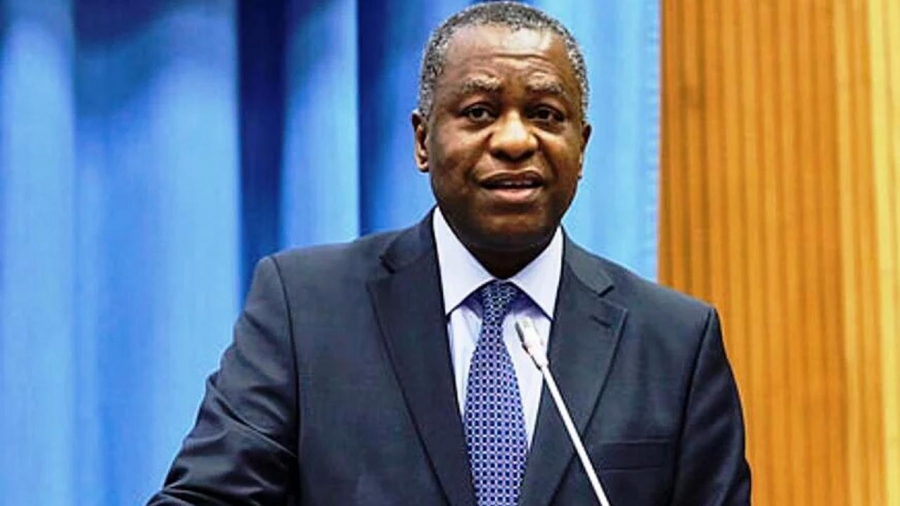
Jeffrey Onyeama
Minister of Foreign Affairs of Nigeria
I used the opportunity to review the Nigerian Economic Diplomacy Initiative (NEDI) of the Ministry of Foreign Affairs of Nigeria under President Muhammadu Buhari. After a general refresher of what NEDI is all about, I dropped the following conclusions on this policy initiative:
NEDI is a strategically important policy tool with huge potentials to make a structural difference in economic regeneration of Nigeria with focus on non-oil sector
NEDI made a good start but has clearly not lived up to its biddings. It has failed rather woefully in showing evidence that it has made a convincing start in delivering on the important task of enhancing inter-agency collaborations
There is no visible effort on the part of NEDI to genuinely engage the Diaspora in a result-oriented way
Unless there is a change of course, NEDI is marked to fail!
I wrapped up with these sets of recommendations:
Foreign trade component should be introduced into the operations of all Ministries, Departments & Agencies (MDAs)
A NEDI Attaché should have a sitting in all major Missions of Nigeria worldwide where possible or the role unambiguously integrated into the duties of all diplomats charged with economic affairs
A formal working relationship should be initiated with Nigerians in Diaspora Organisation (NIDO) worldwide to enhance professional Diaspora mobilization
Clear targets should be set for inward investment flows as aconsequence of NEDI activities